
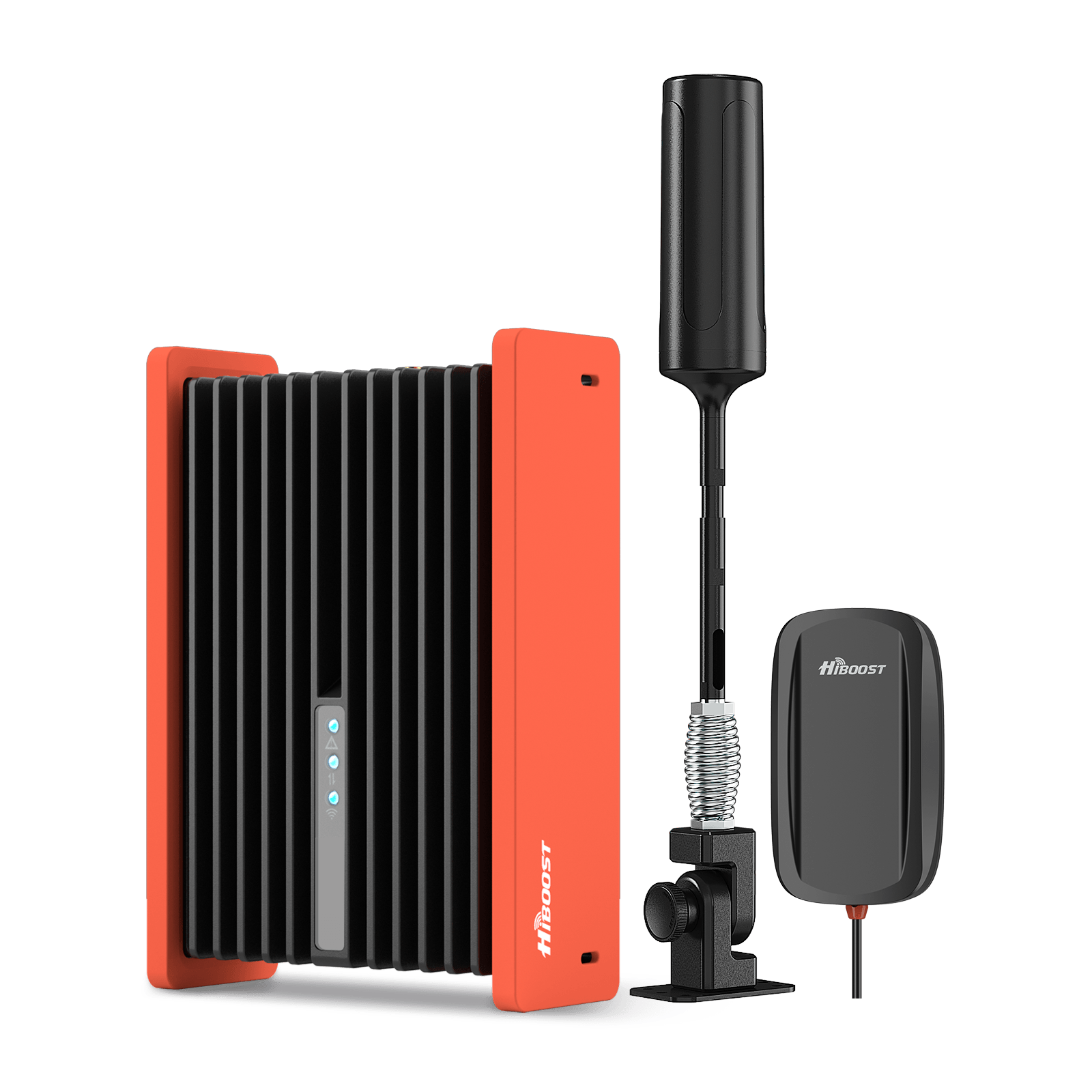
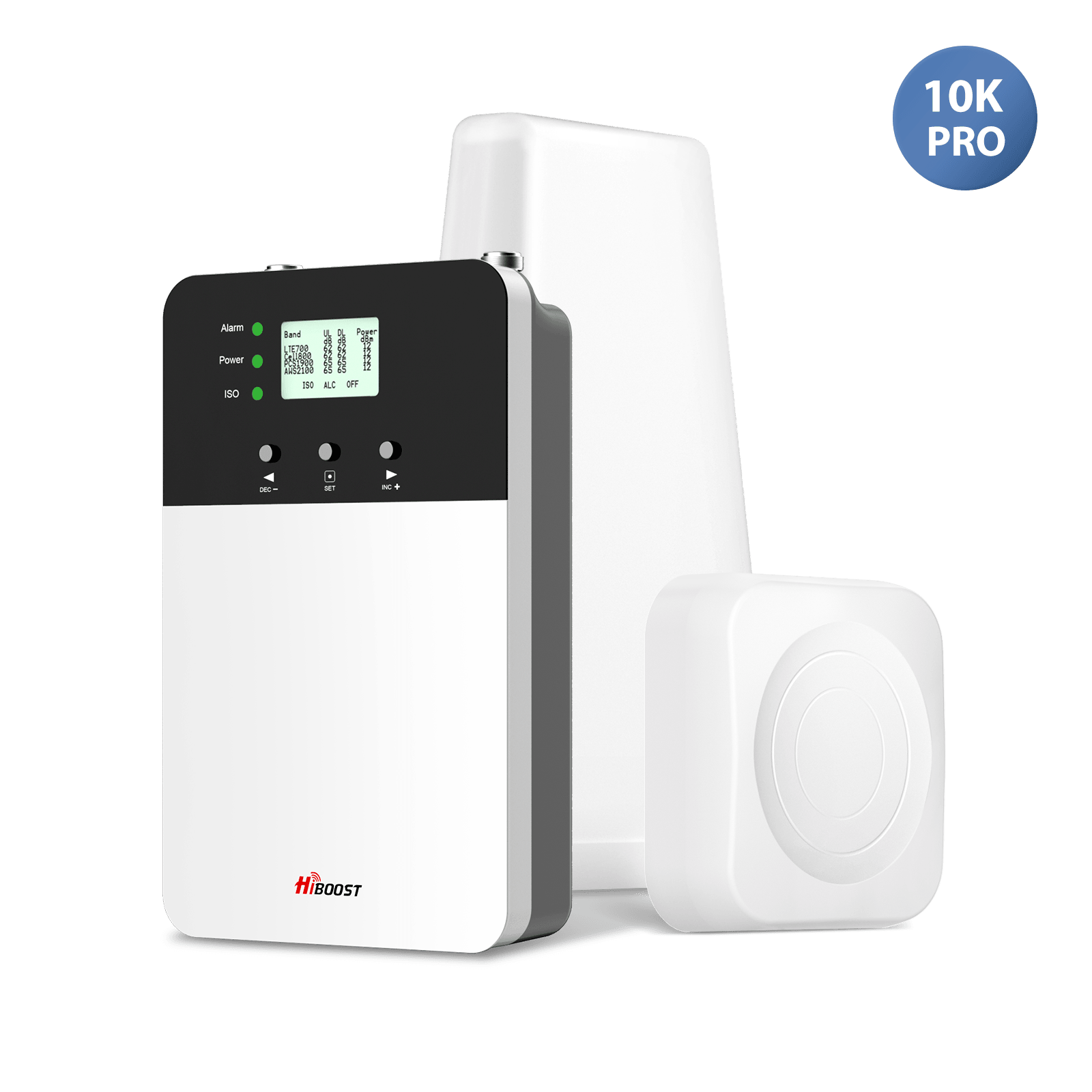
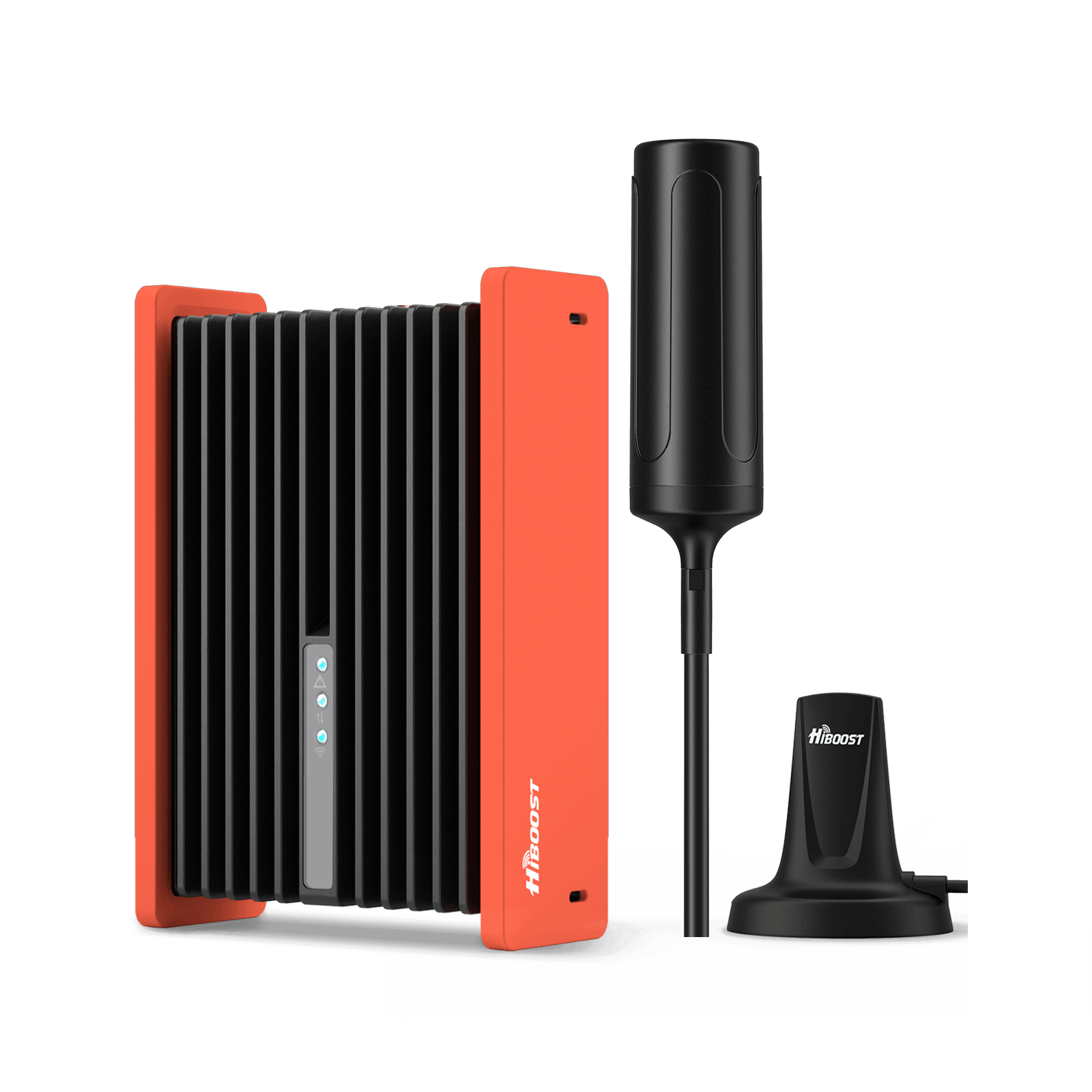
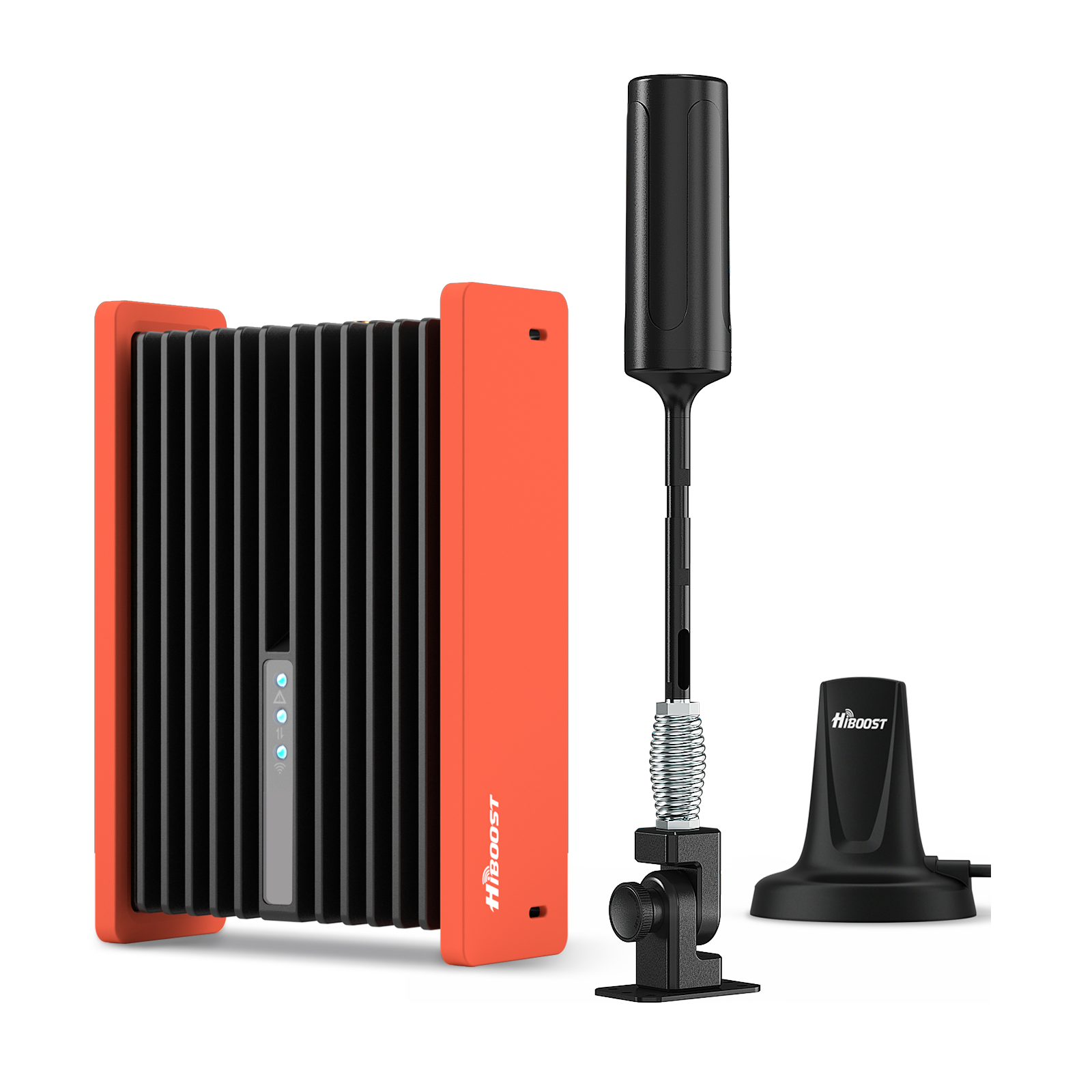
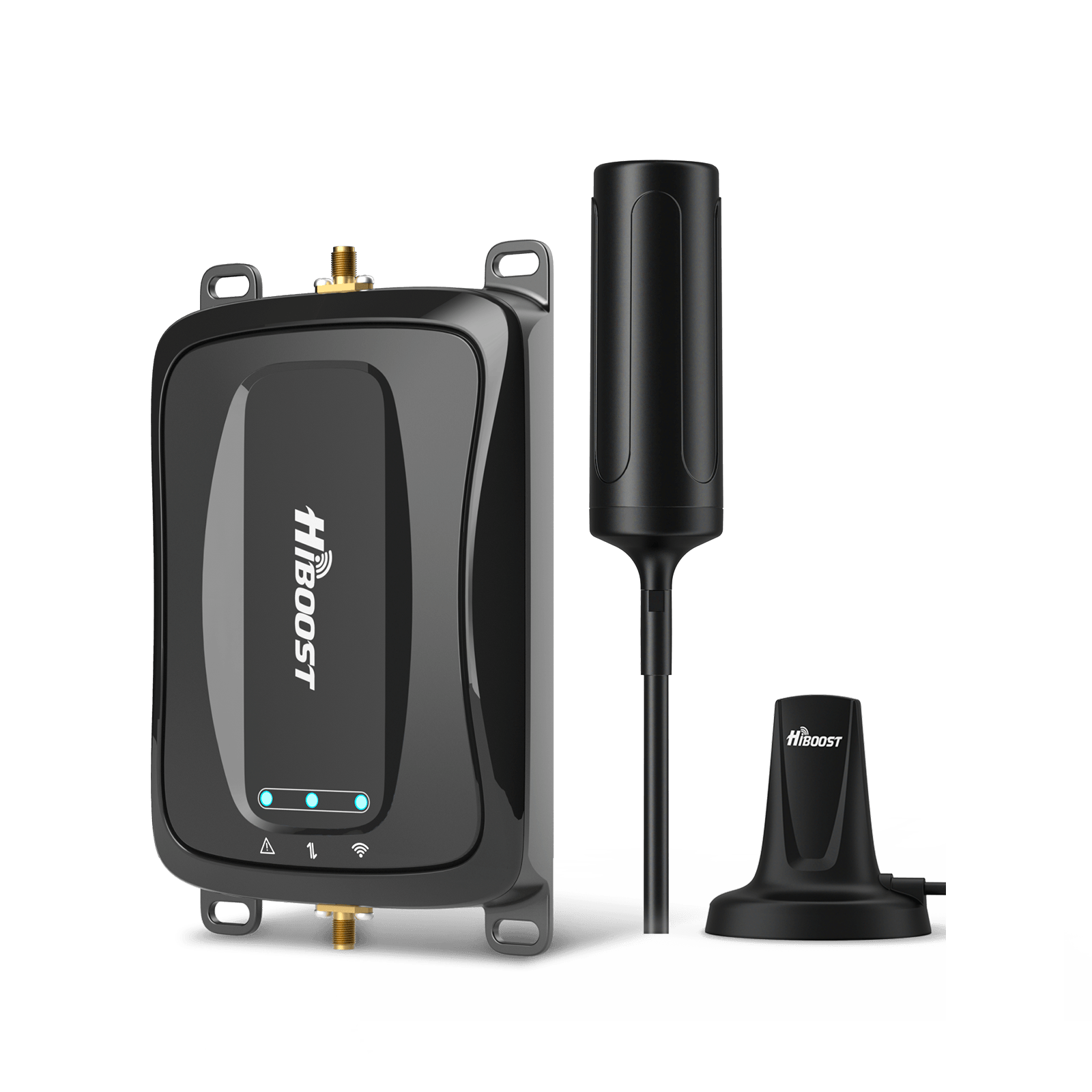
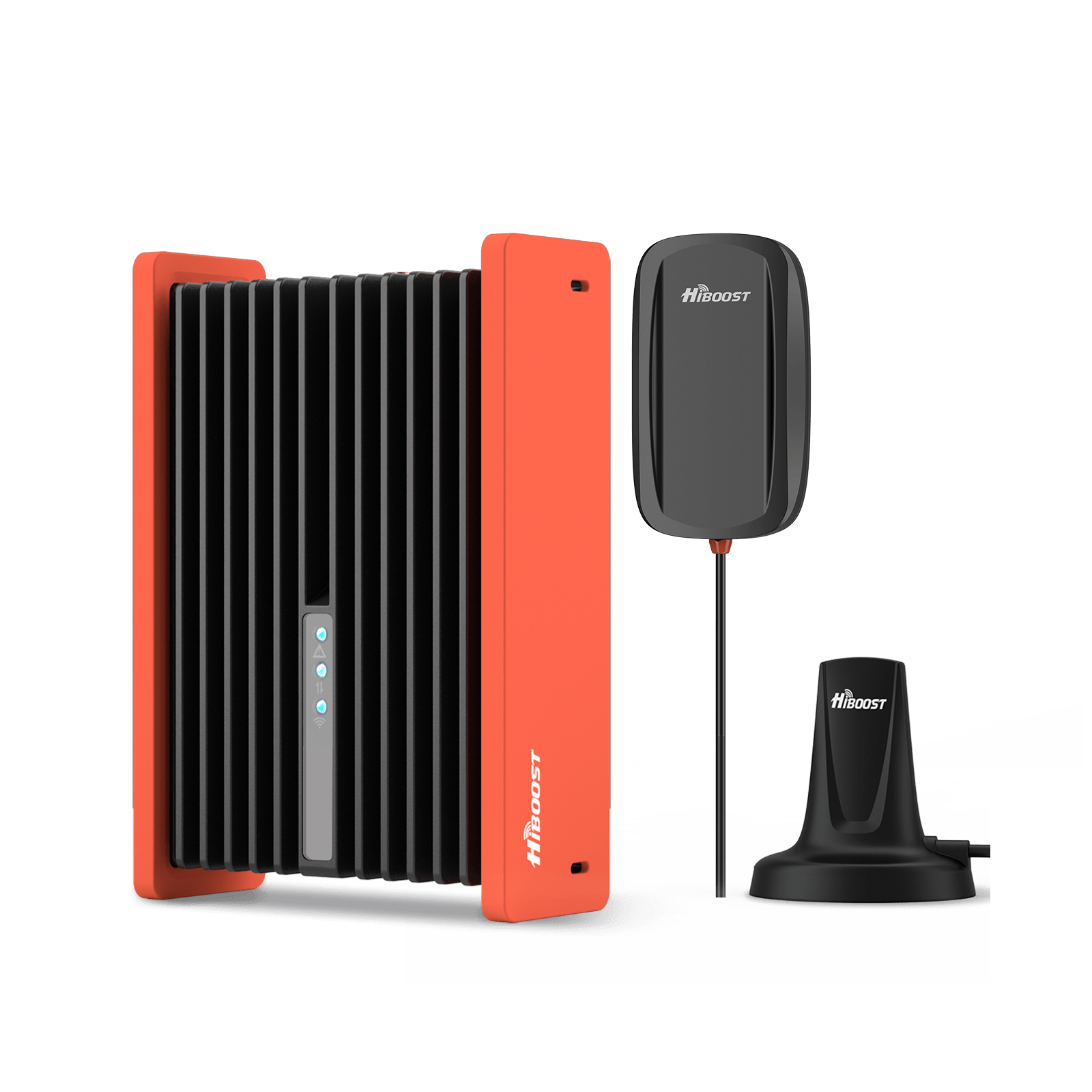
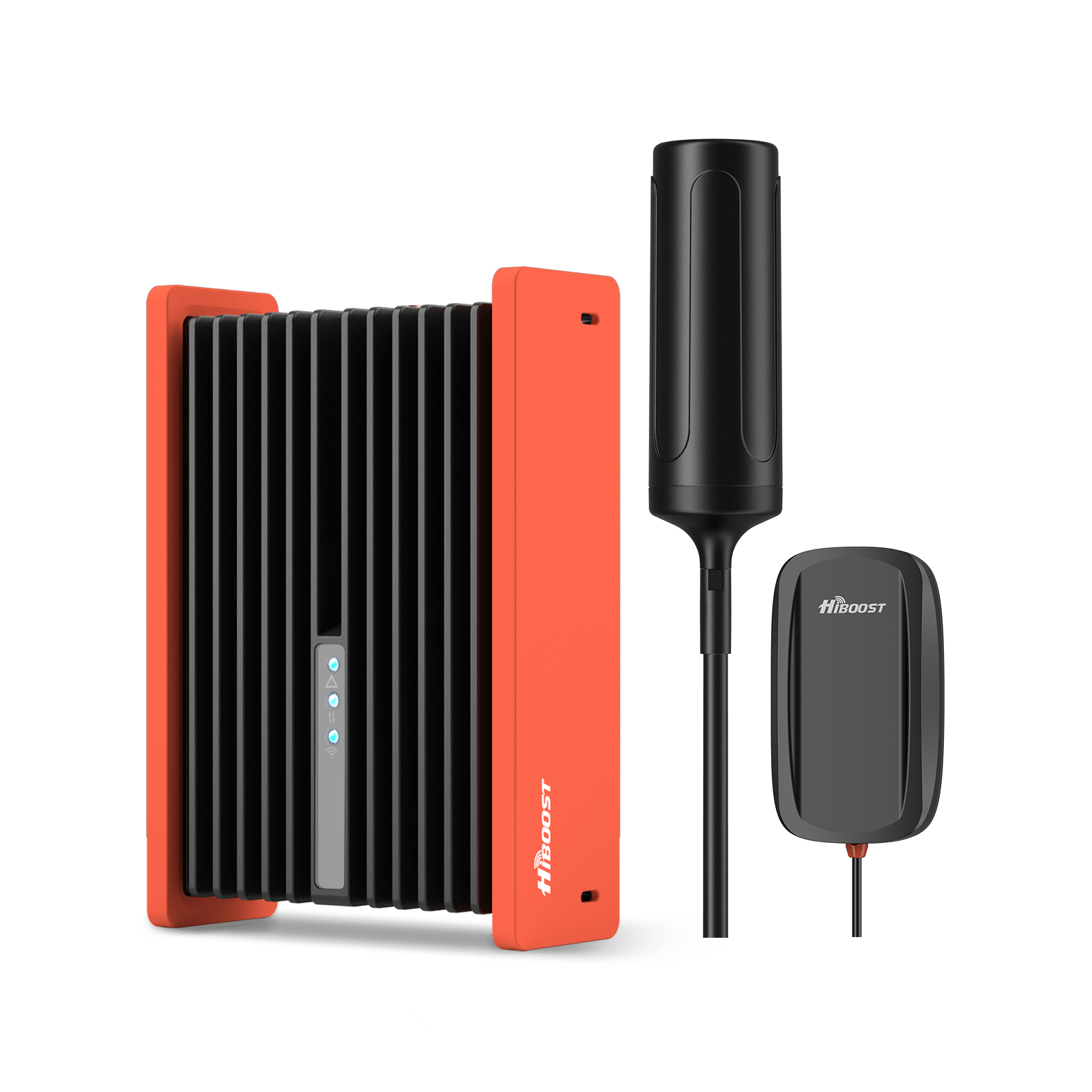
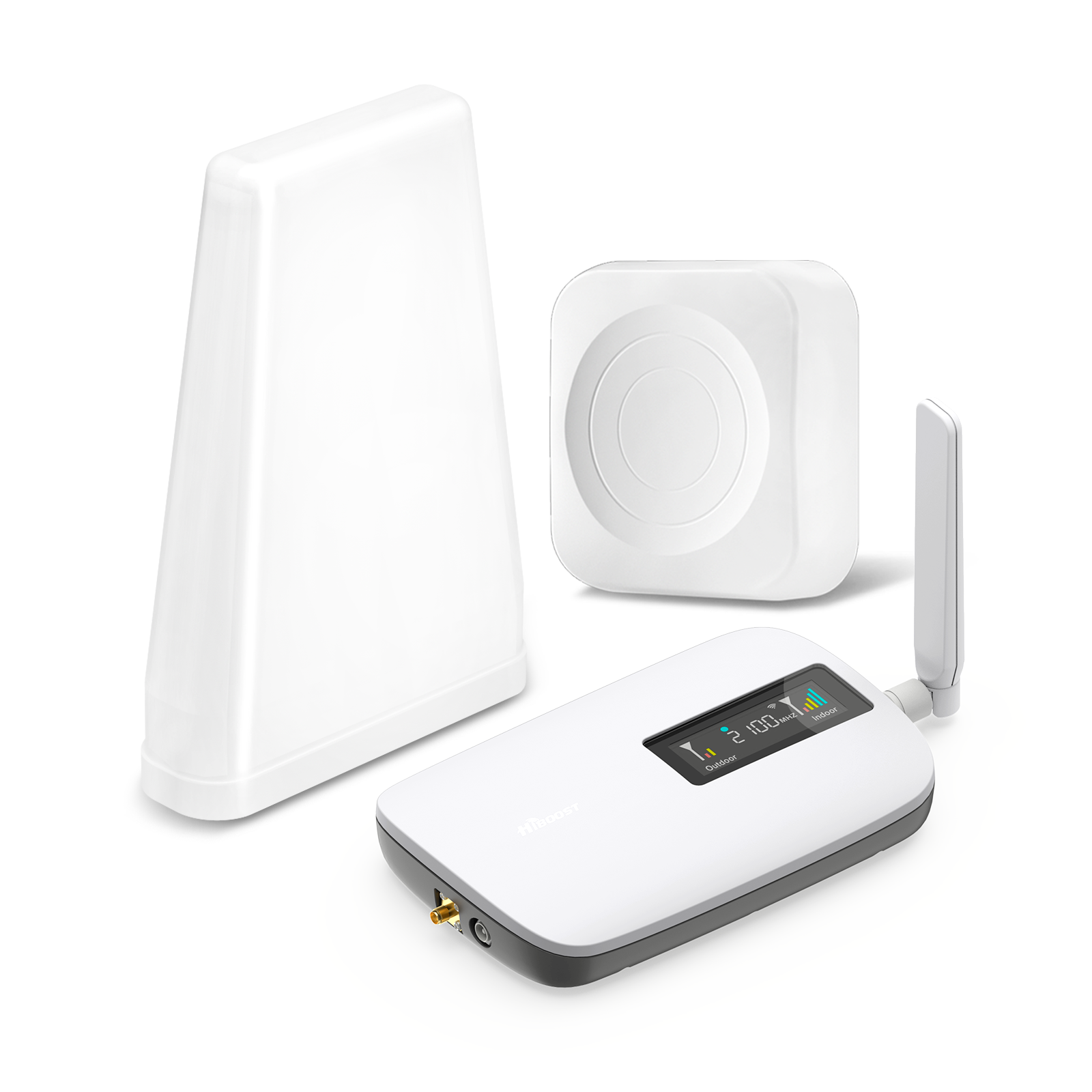
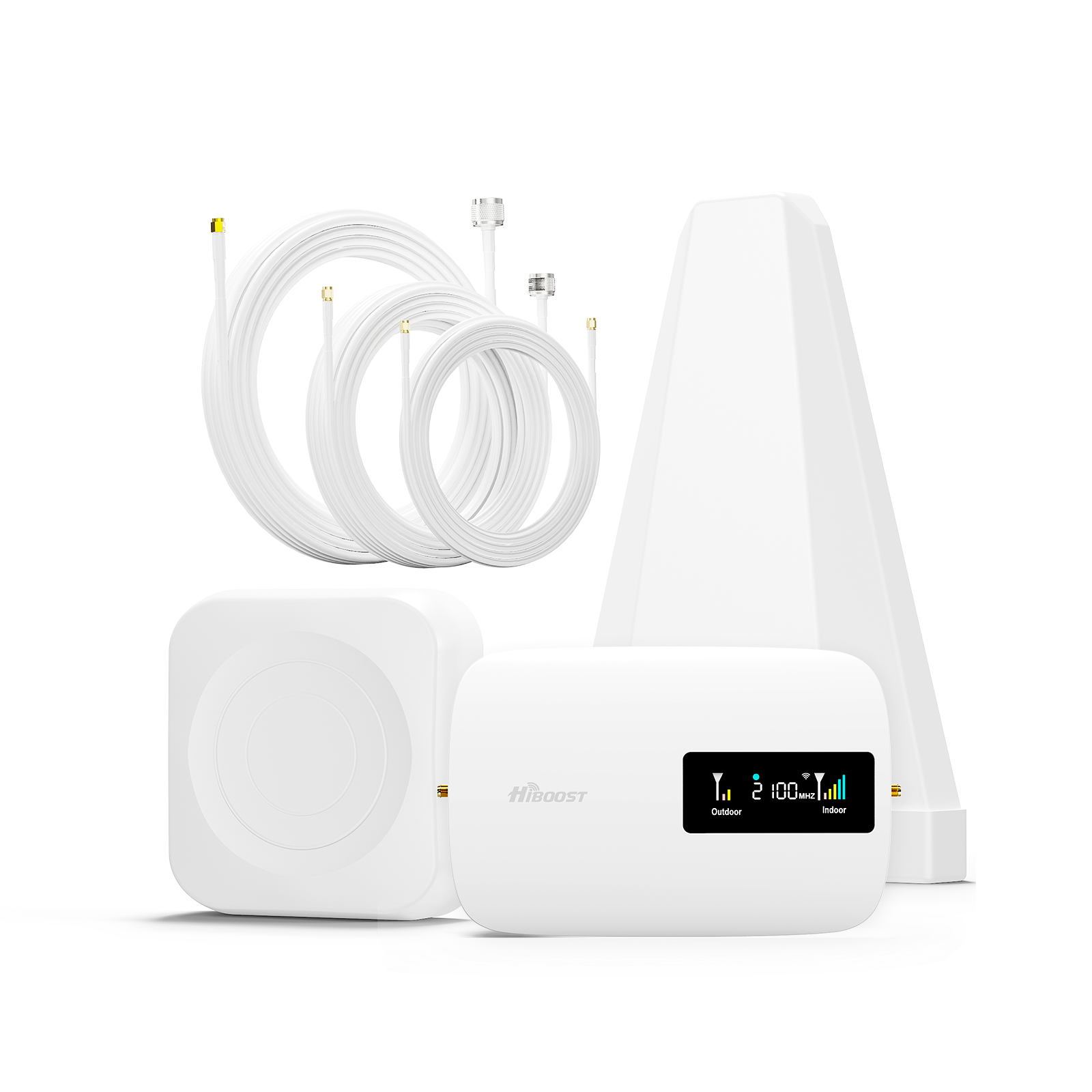
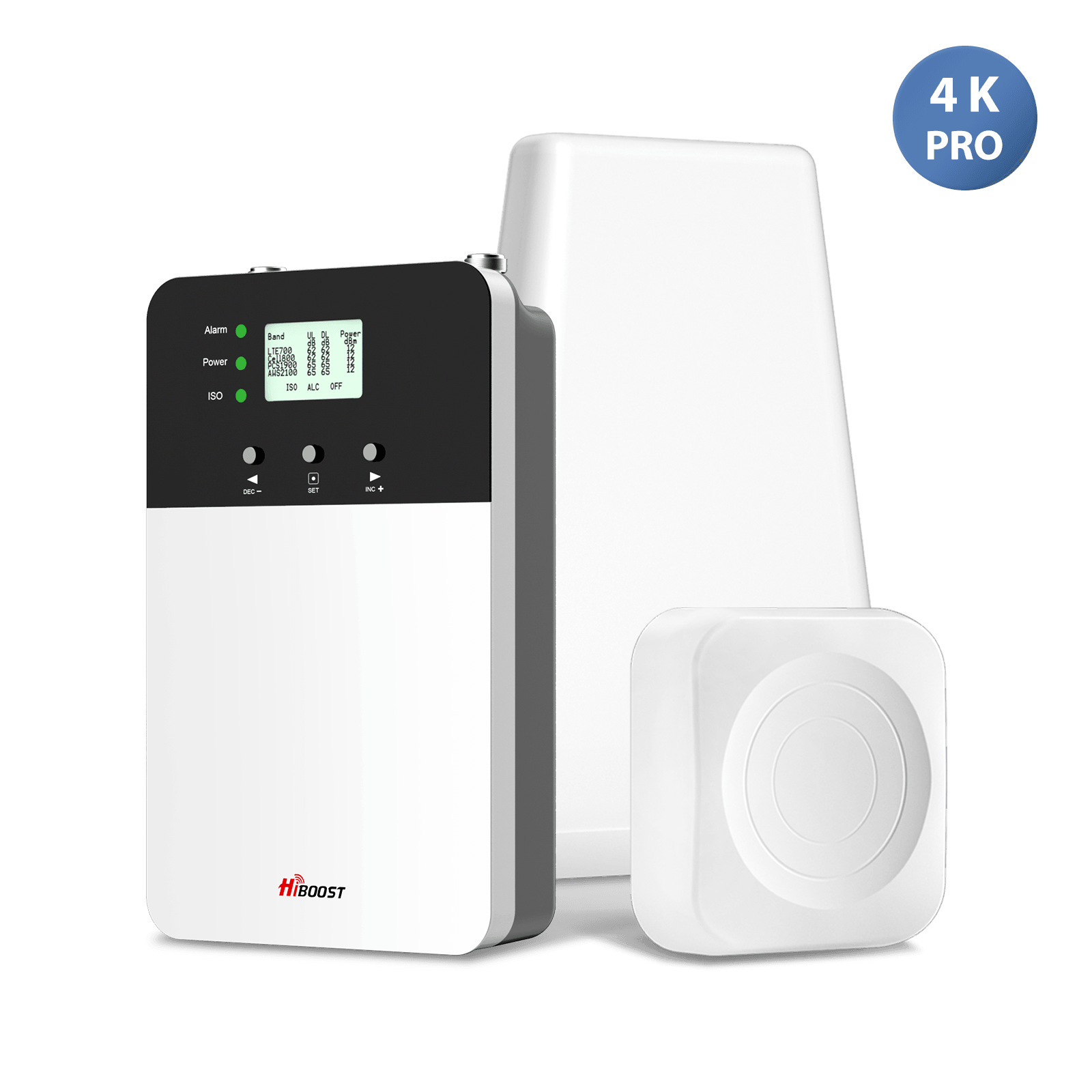
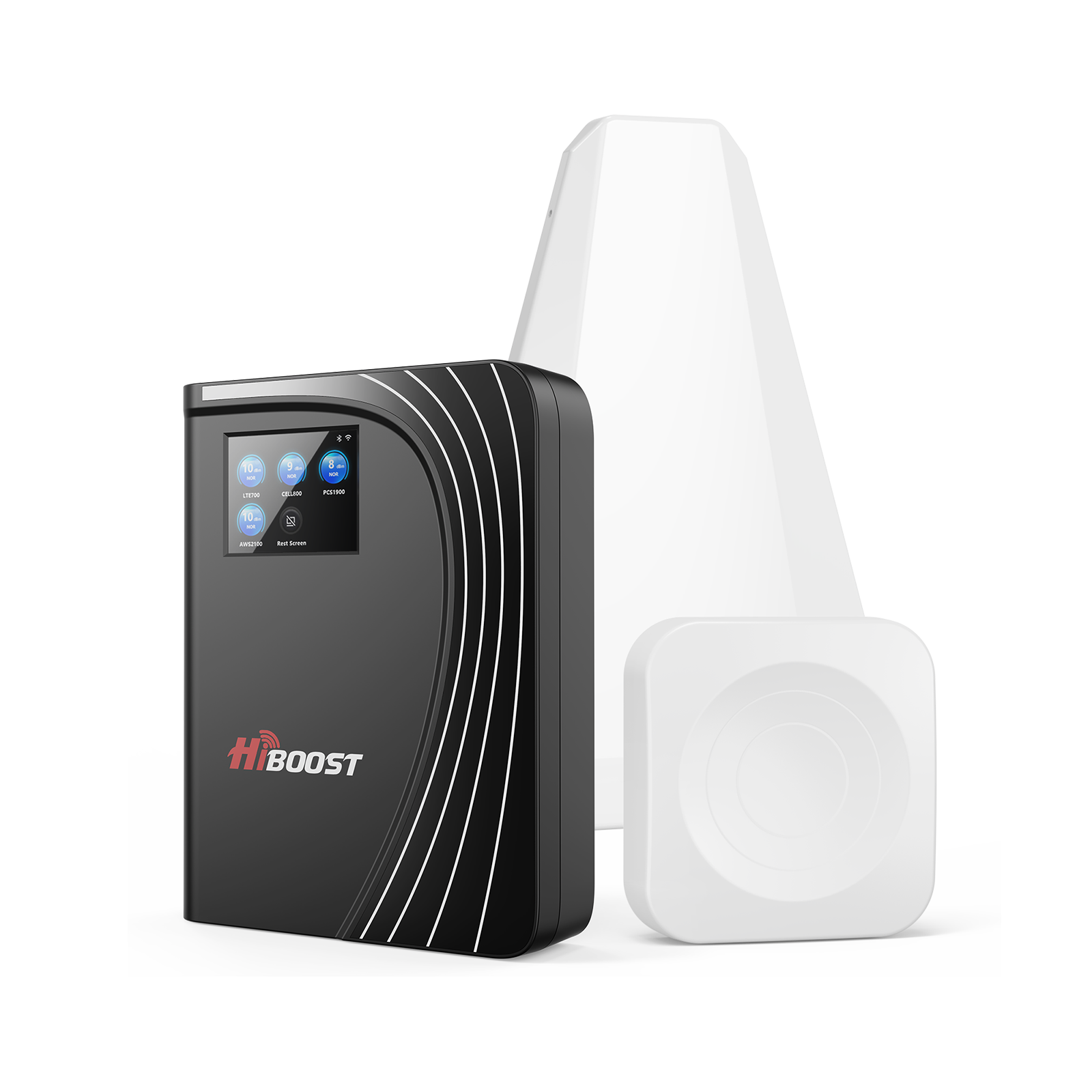
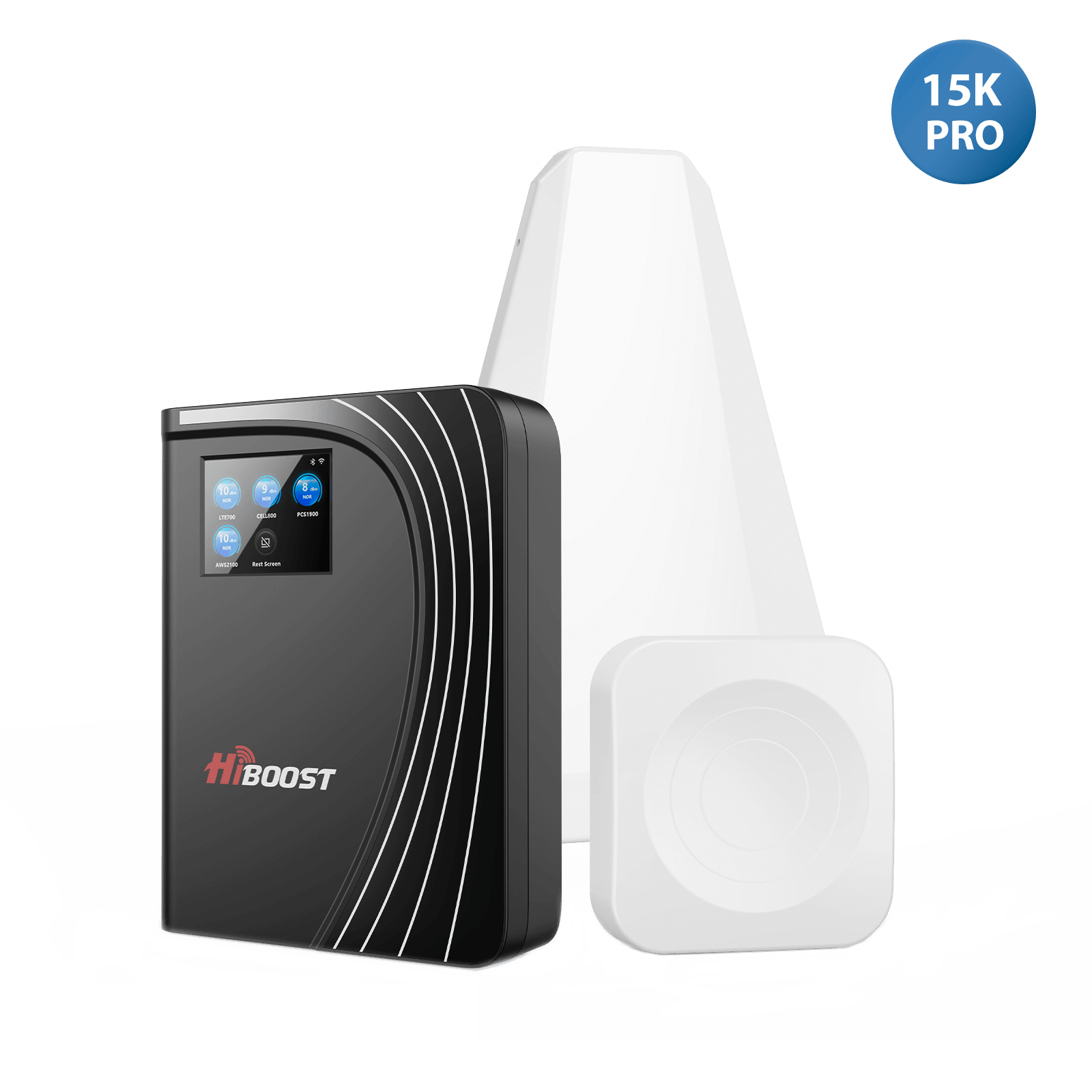
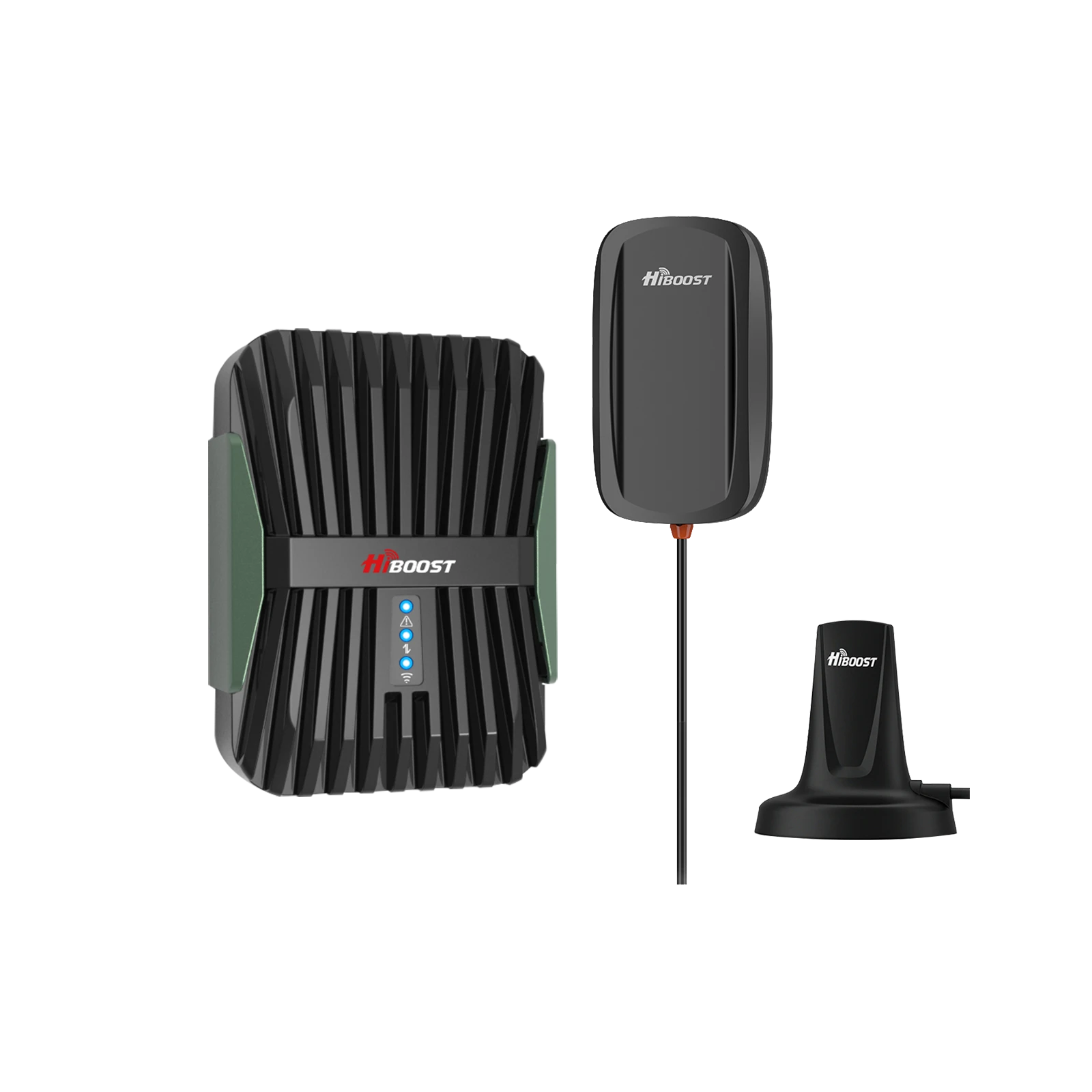
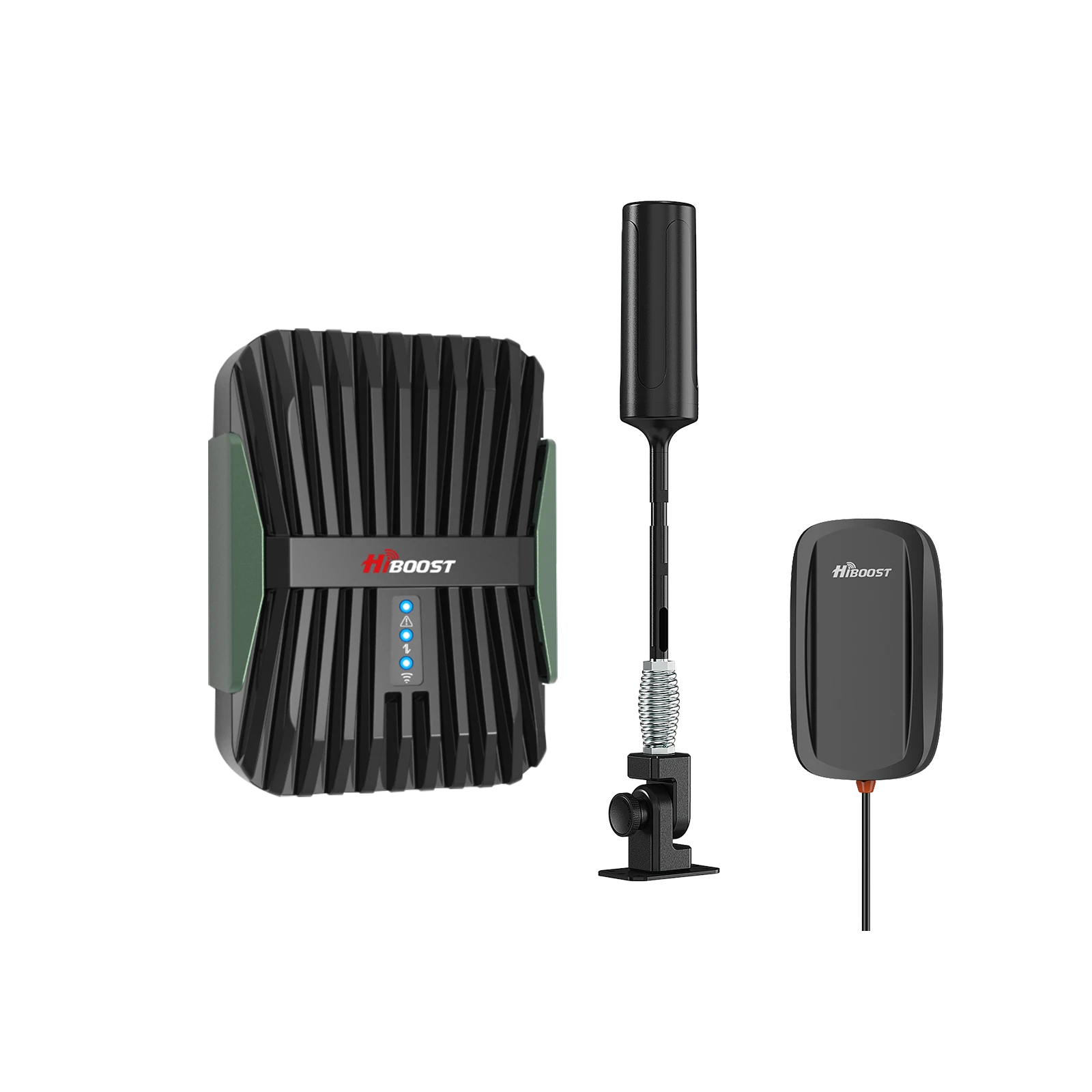
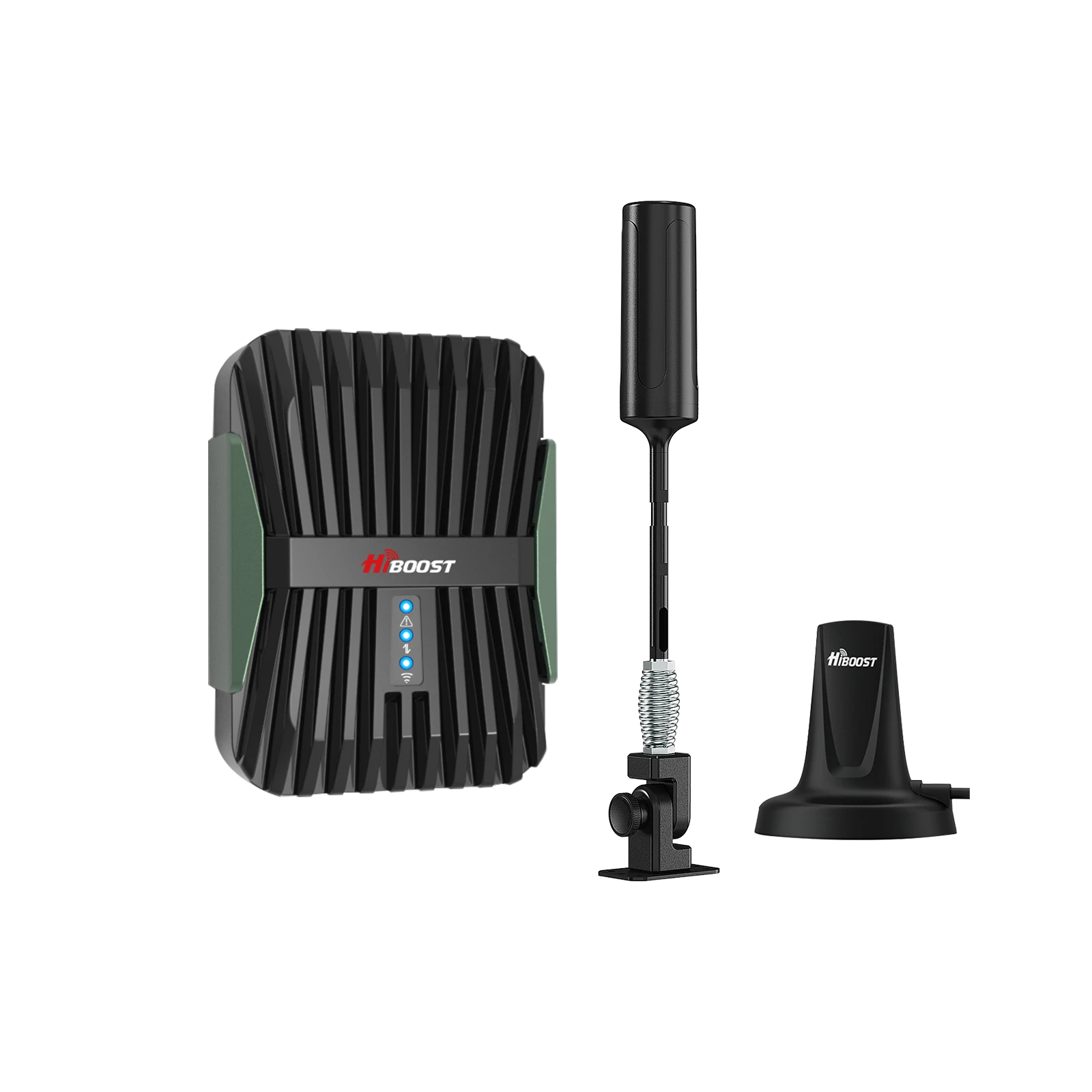
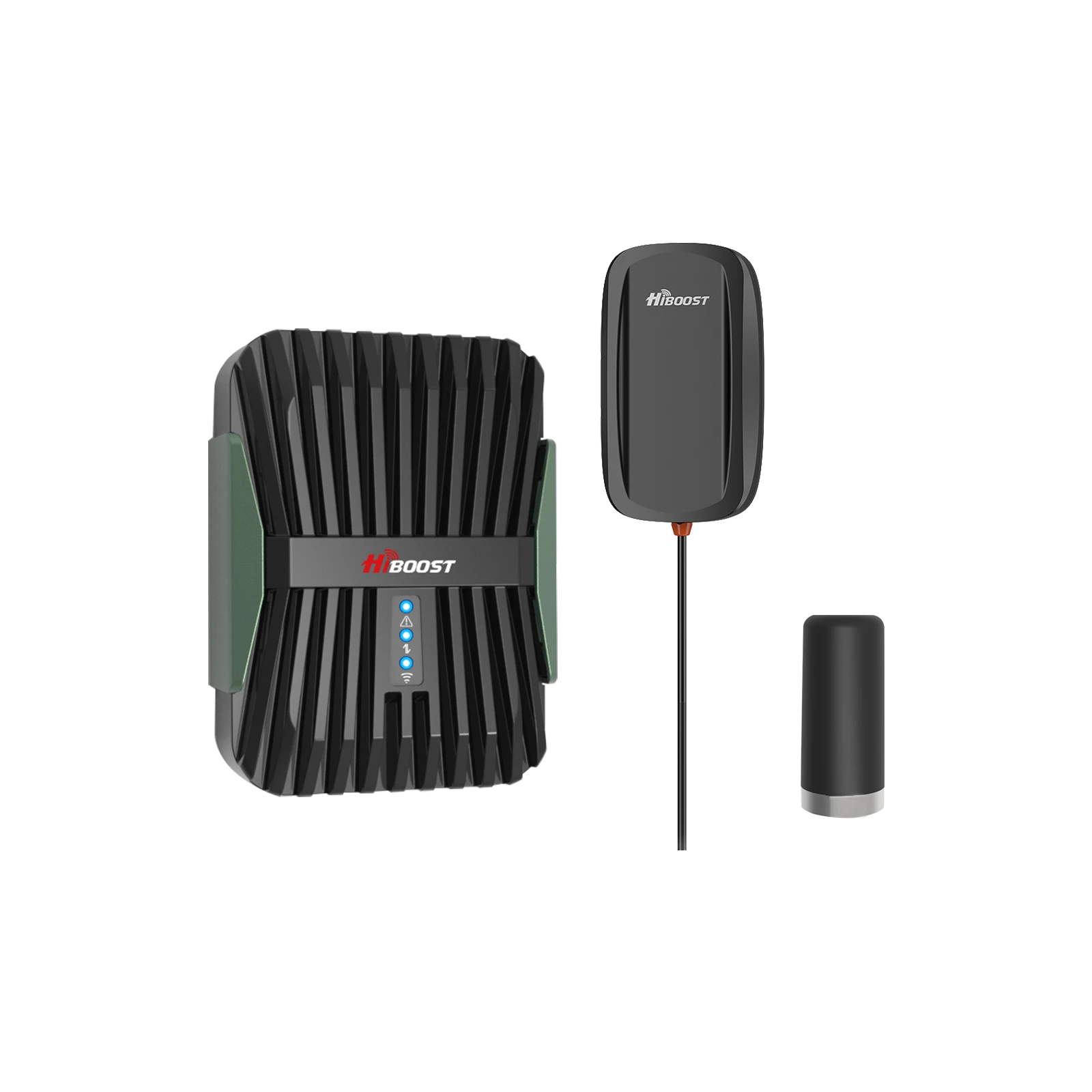
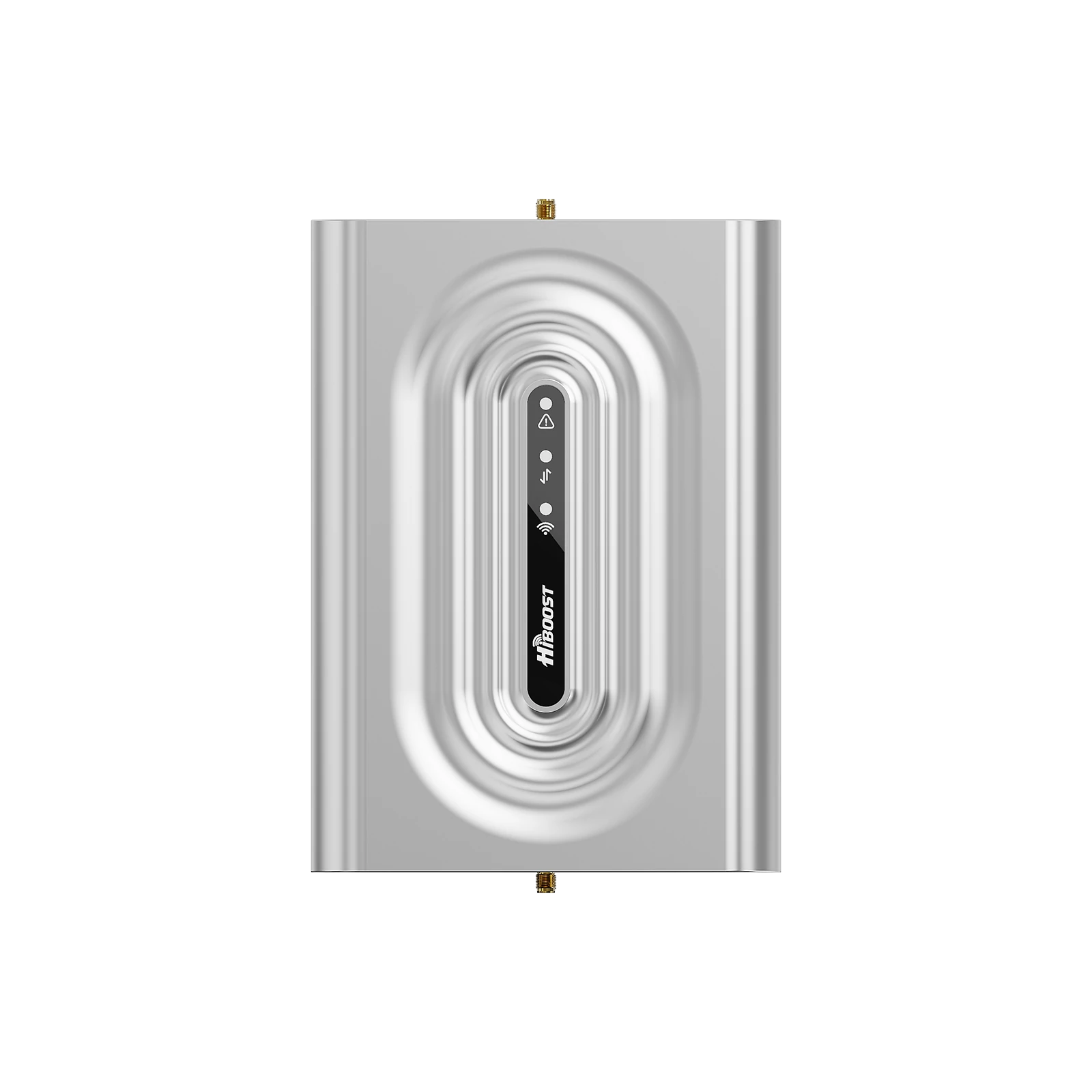
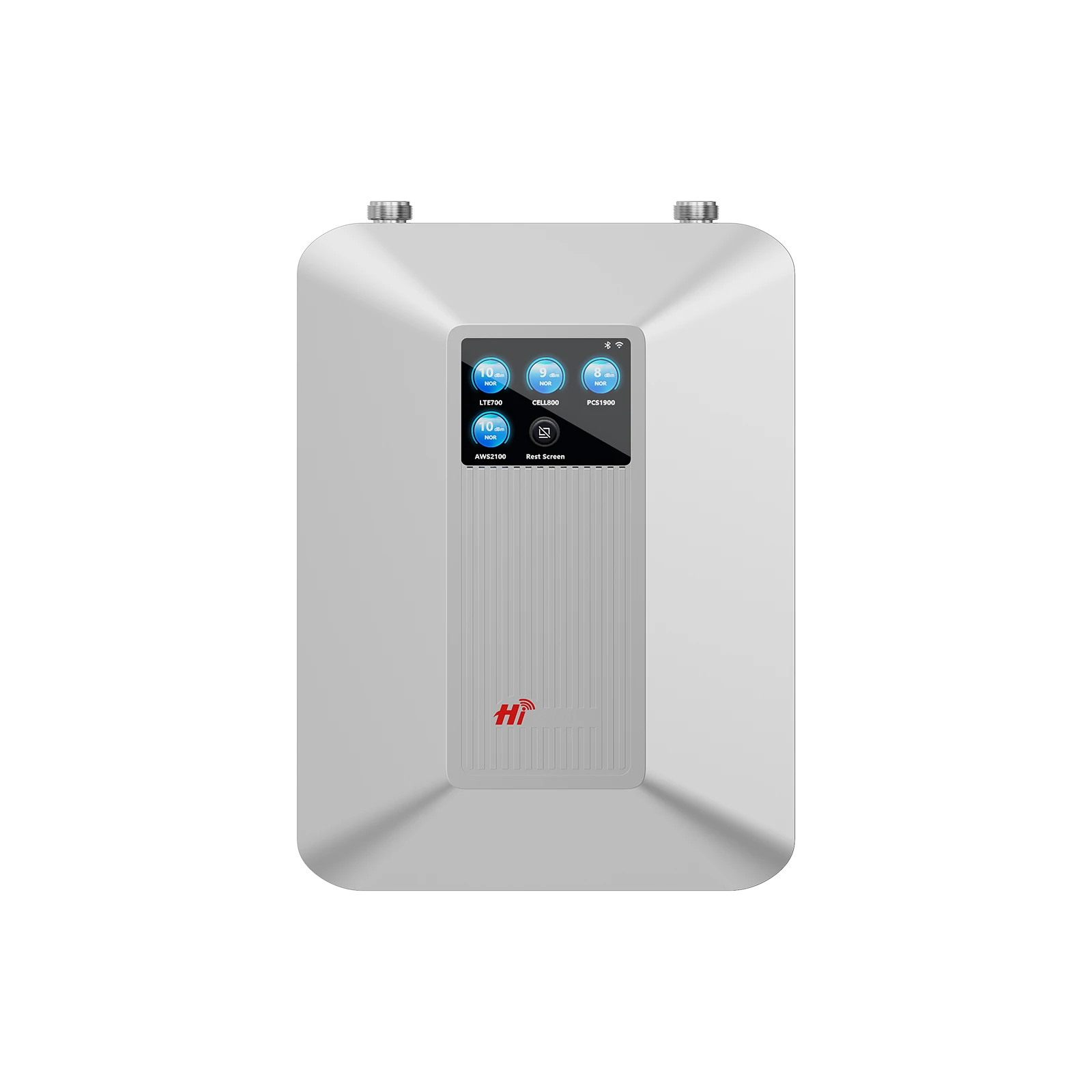
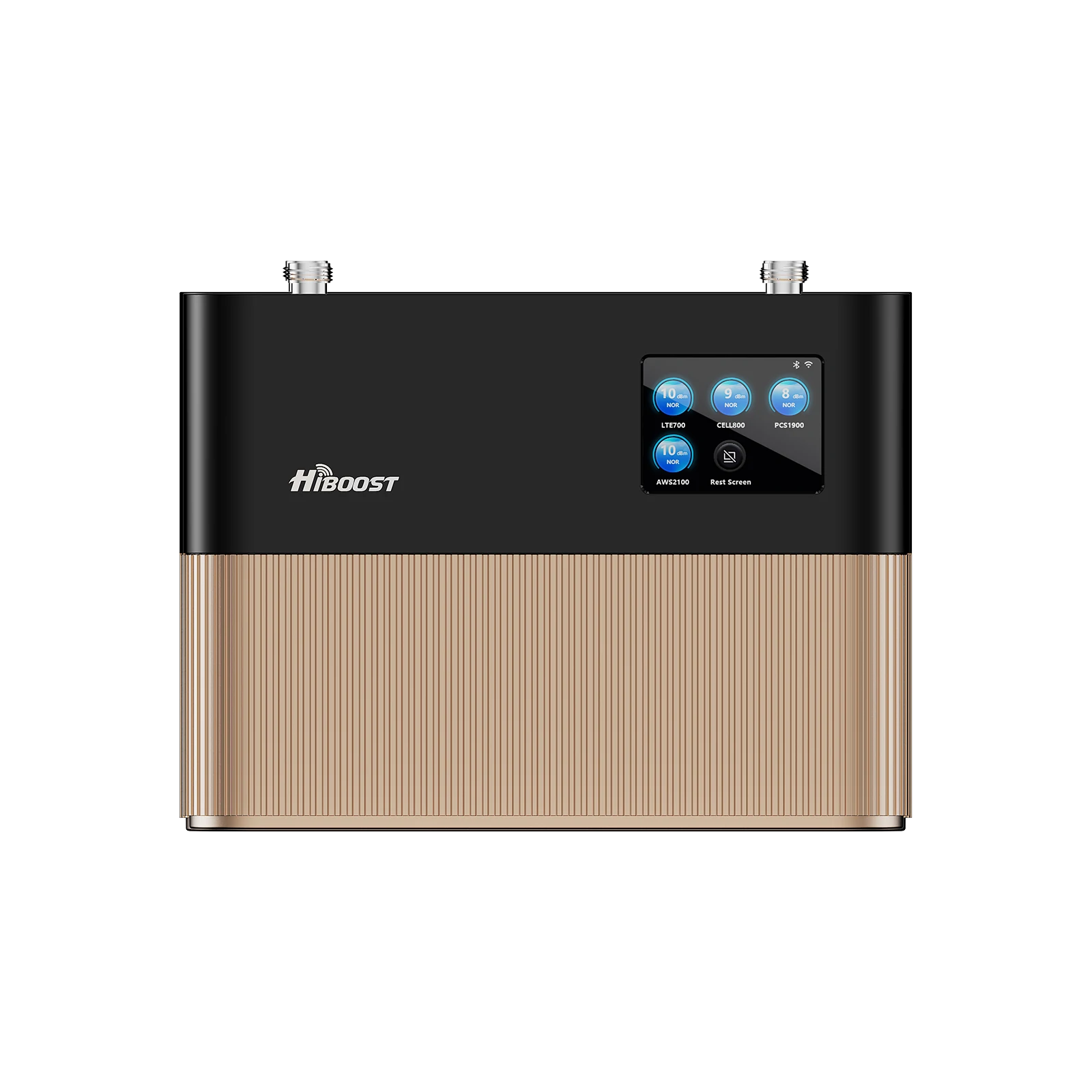
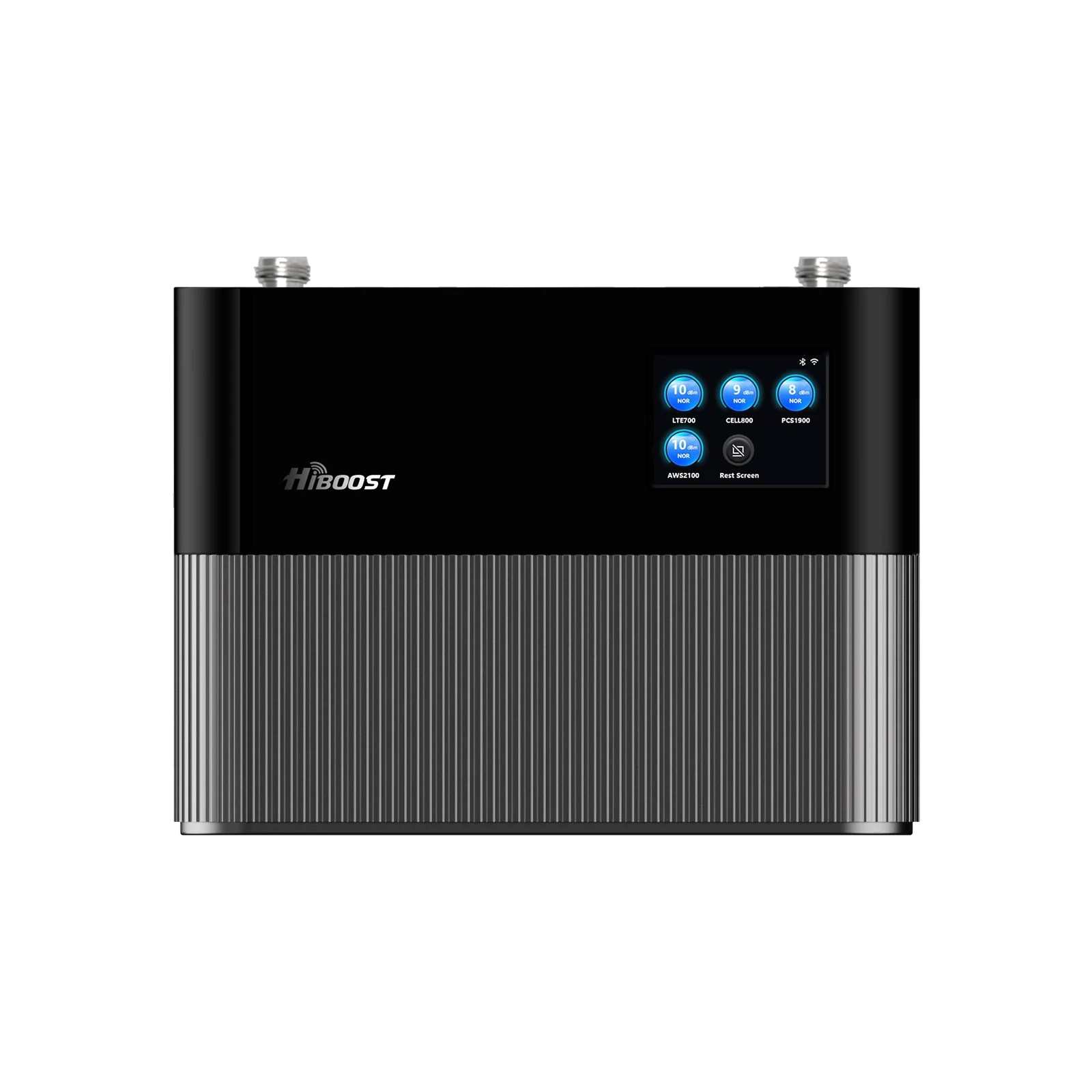
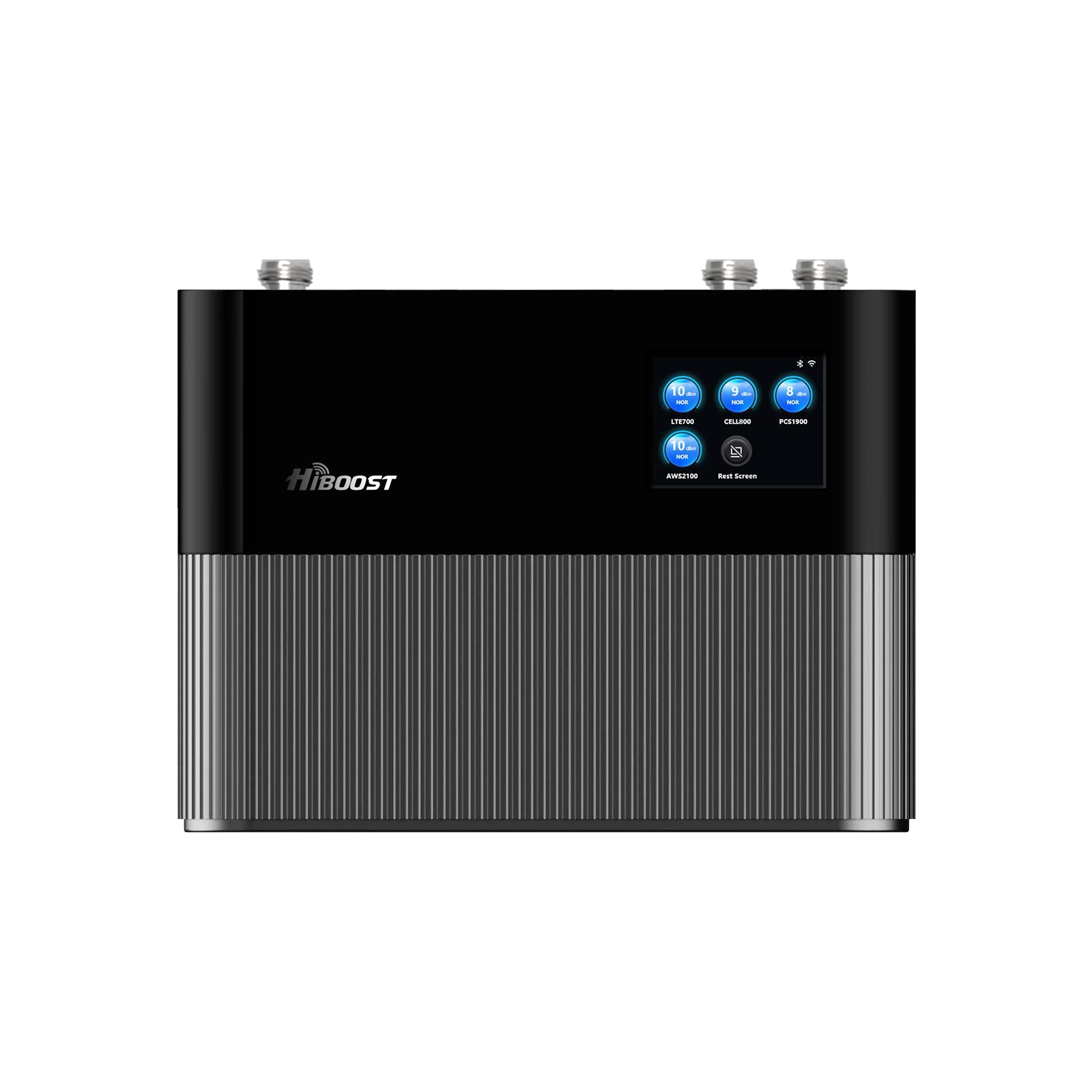
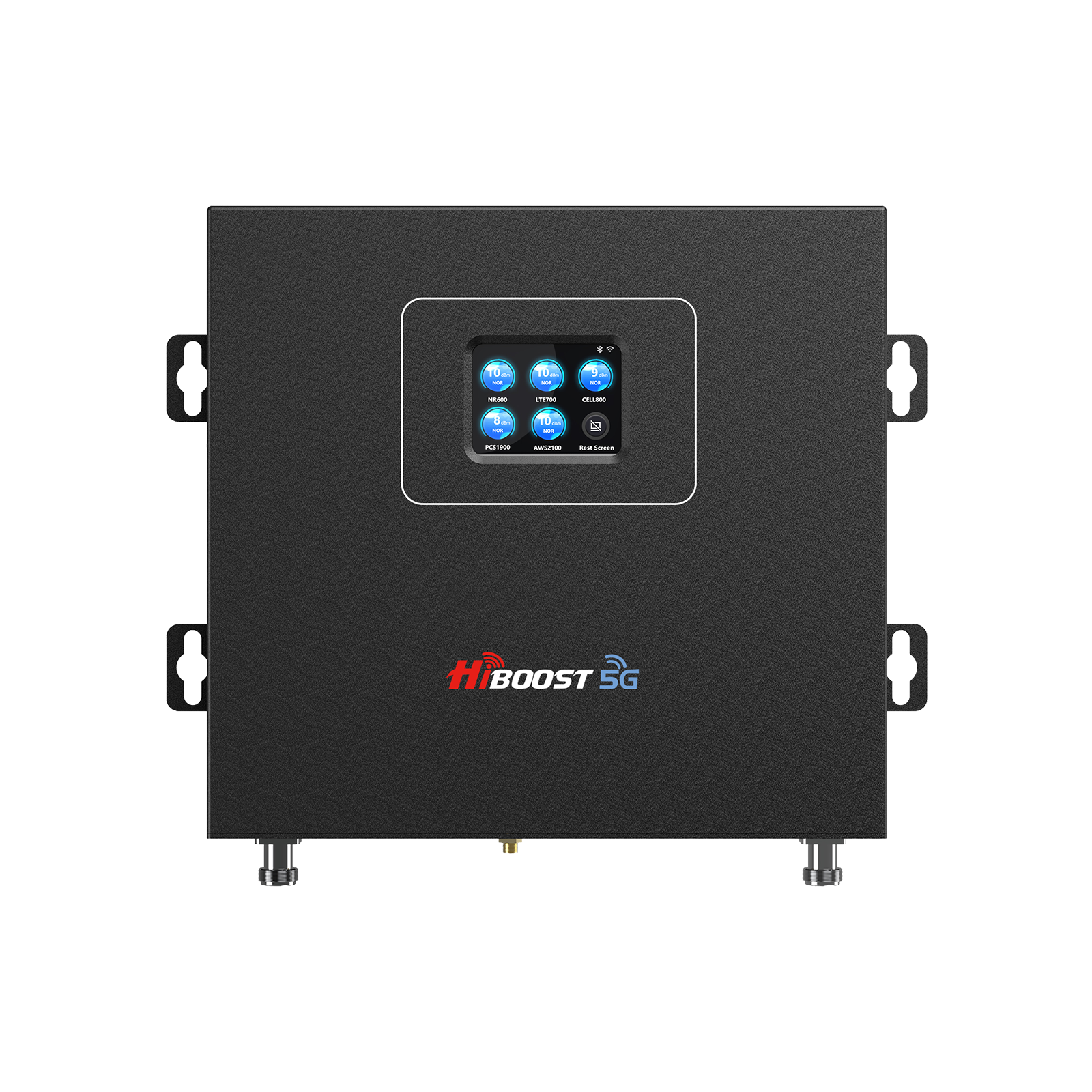
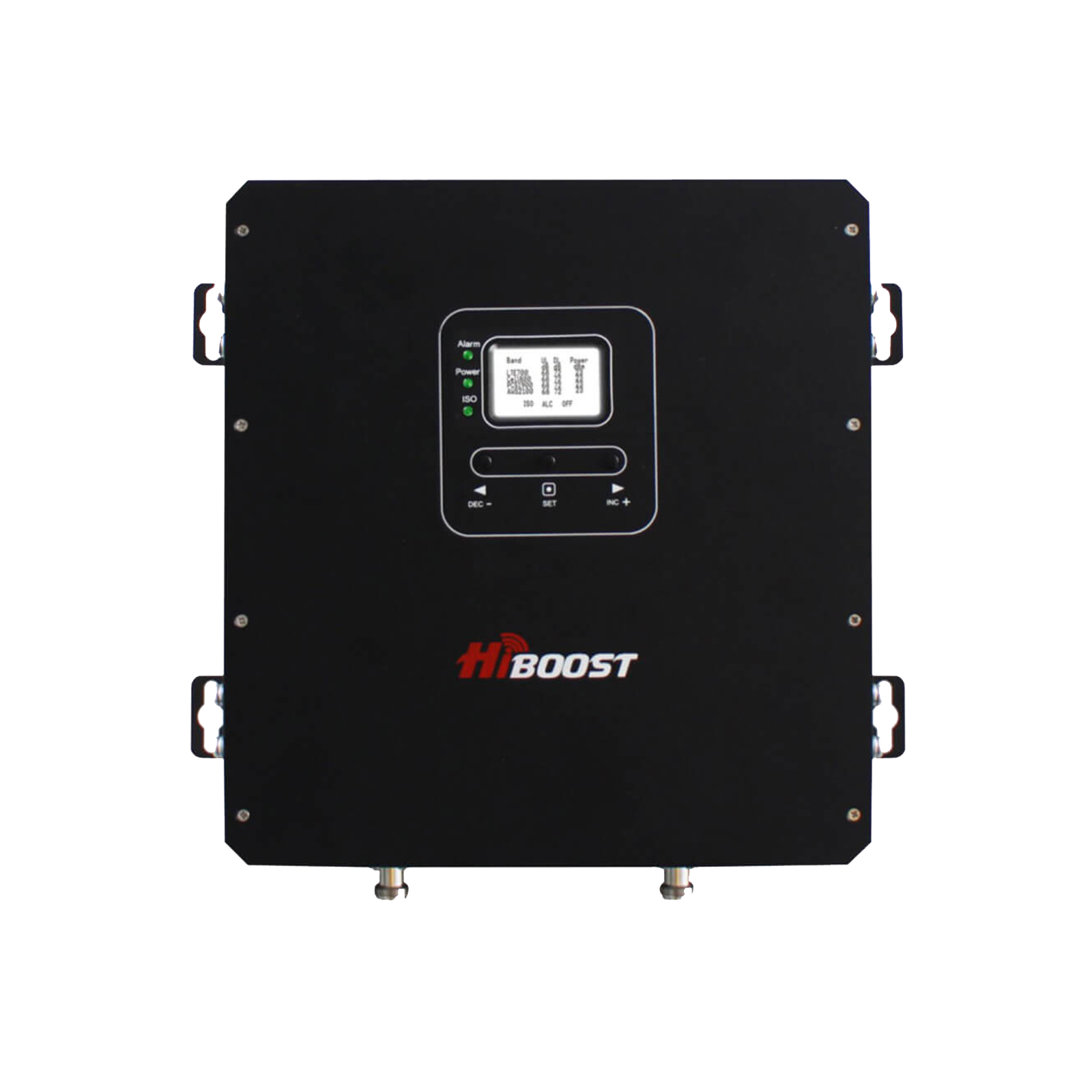
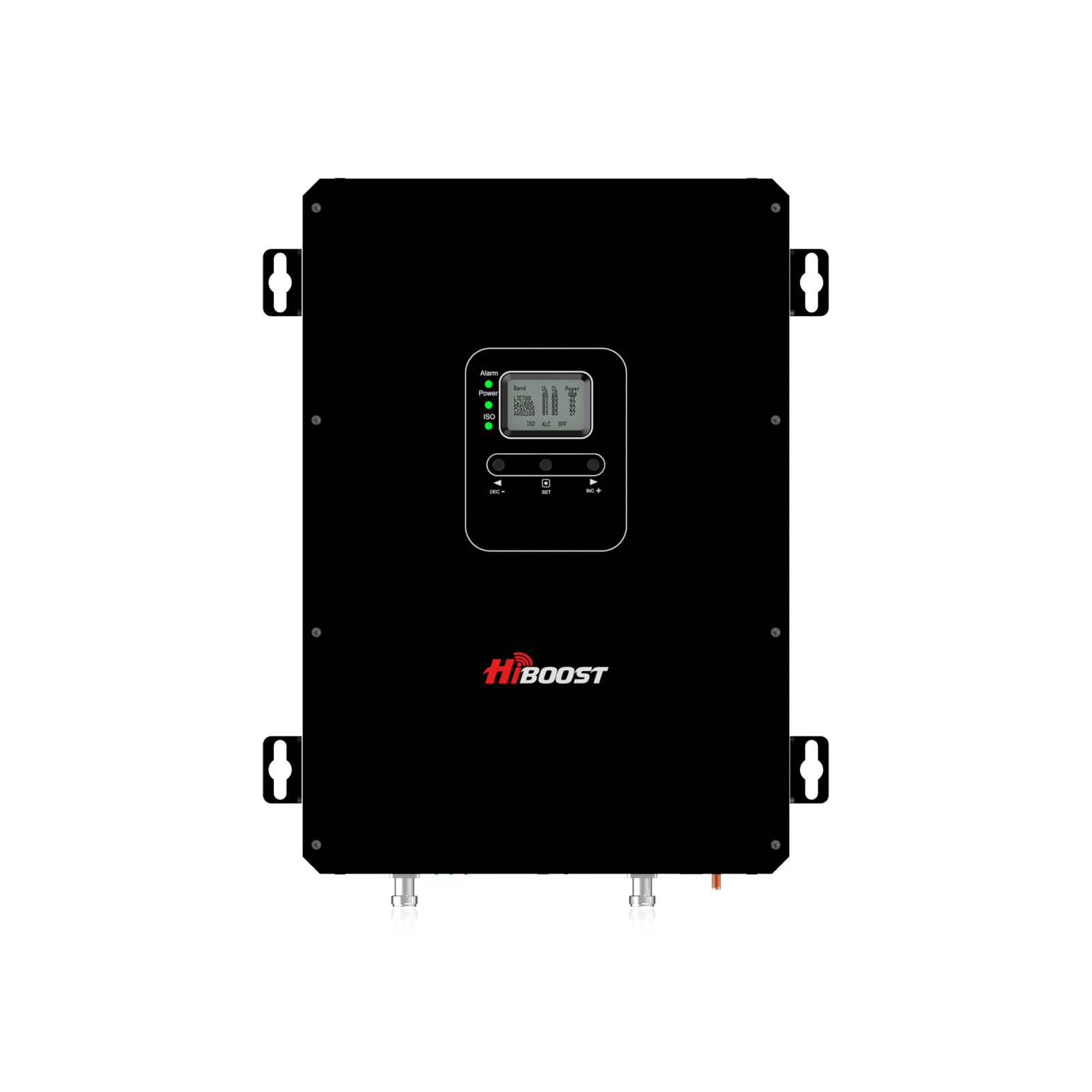
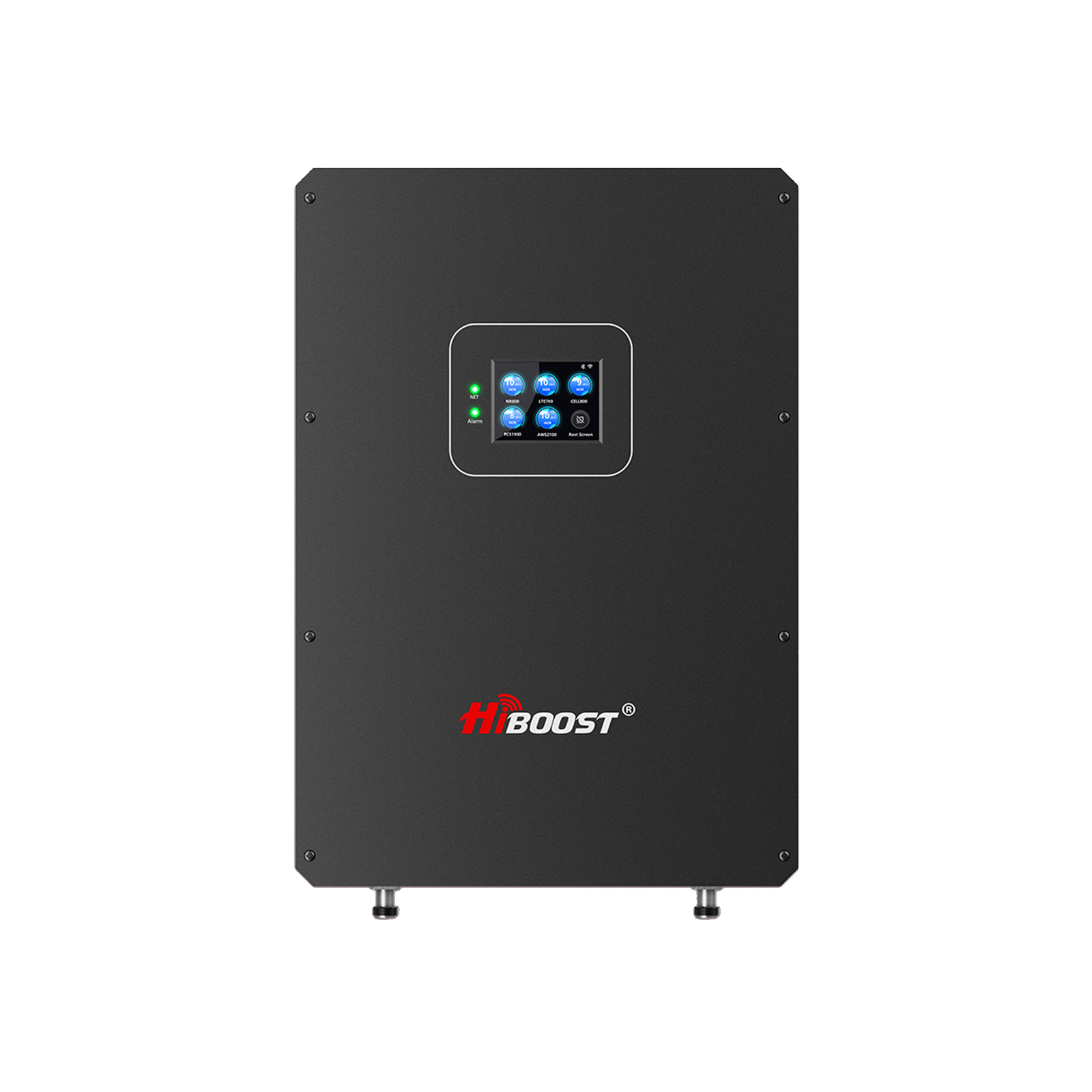
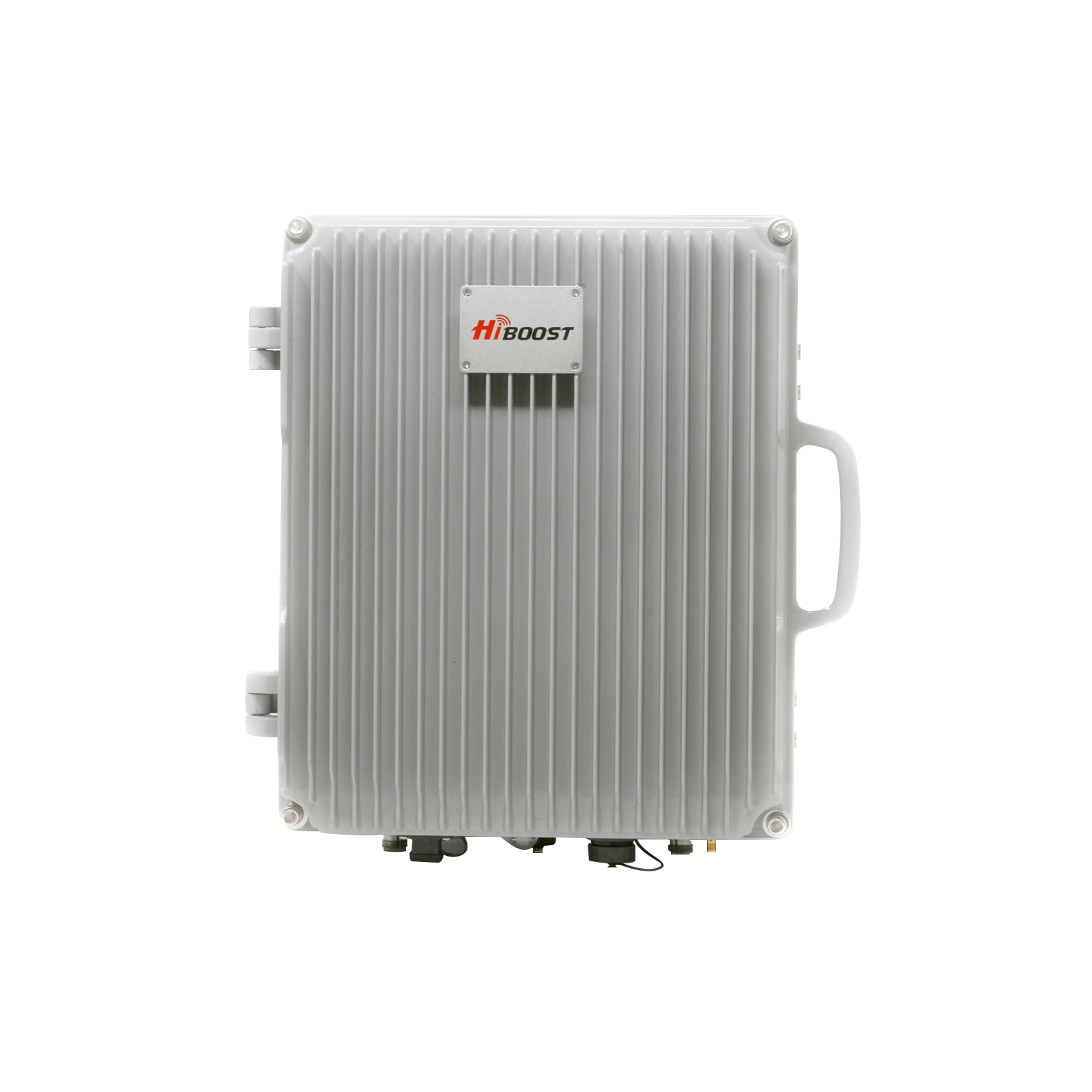
A cell phone signal booster improves weak 4G and 5G coverage by capturing existing outdoor cellular signals, amplifying them, and rebroadcasting them indoors or inside a vehicle. It does not create signal. To work effectively, it requires at least a weak outdoor signal (typically better than -105 dBm) and proper antenna installation.
This 2026 guide is written for shoppers who want a practical, step-by-step way to pick the right HiBoost system based on (1) your outdoor signal quality, (2) how much area you need to cover, and (3) whether your primary problem is weak 4G LTE / low-band 5G indoors, or dropouts while traveling. HiBoost’s consumer lineup spans from small-space coverage to multi-room and whole-home kits, and the brand emphasizes FCC-certified boosters and app-assisted setup.
1. Signal booster fundamentals for 4G and 5G
1.1 What Is a Cell Phone Signal Booster?
A booster system works like a “bridge” between your carrier’s outdoor signal and the place you actually need service (home, office, RV, car). The core principle: capture → amplify → rebroadcast.
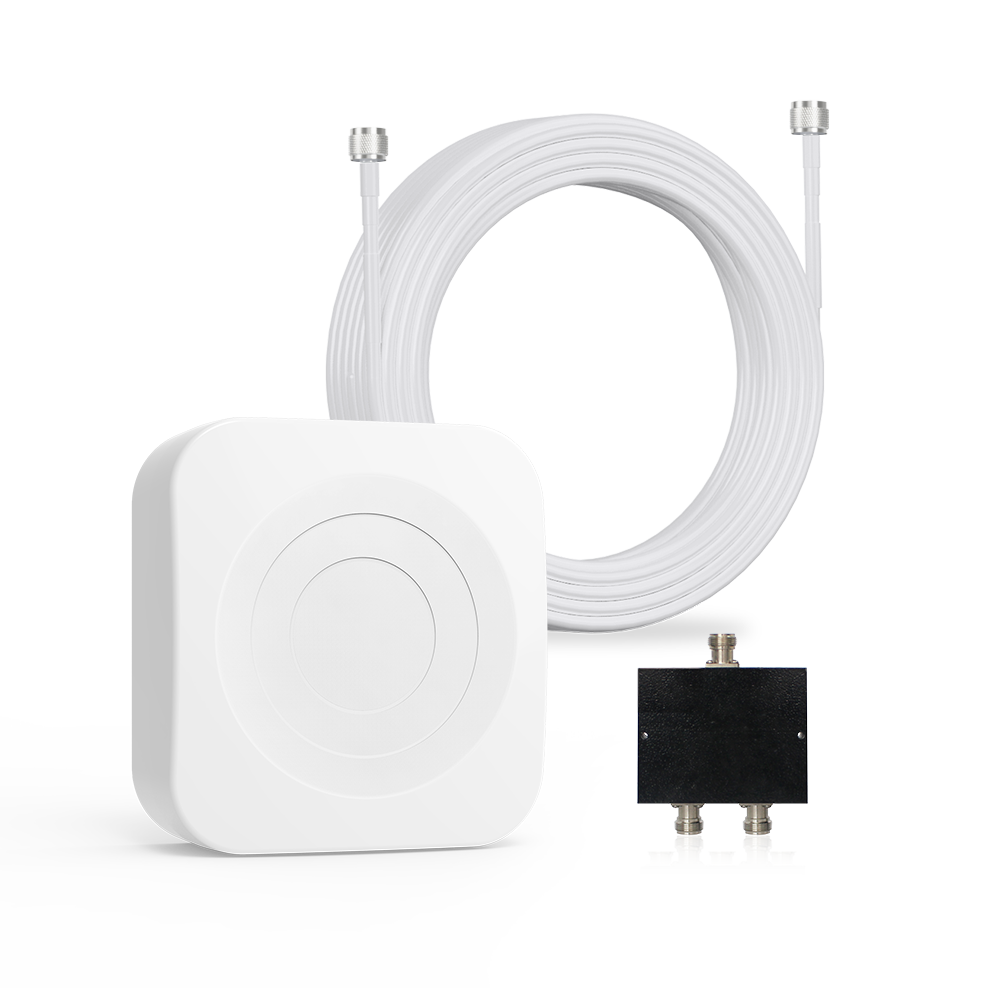
A standard booster system includes three components:
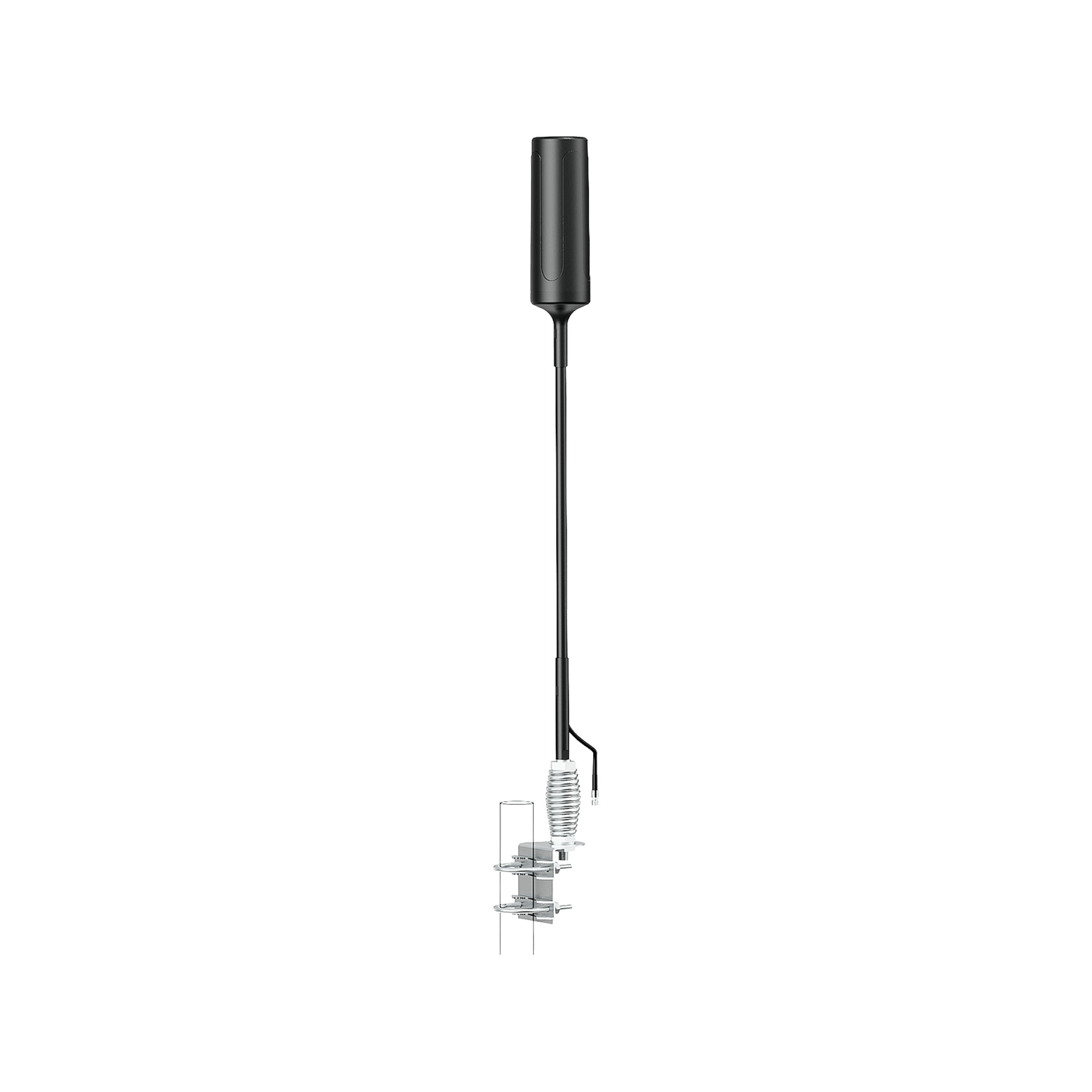
- Outdoor antenna – Captures the strongest available signal outside.
- Amplifier / Booster – Increases the captured signal and manages power so the system stays stable.
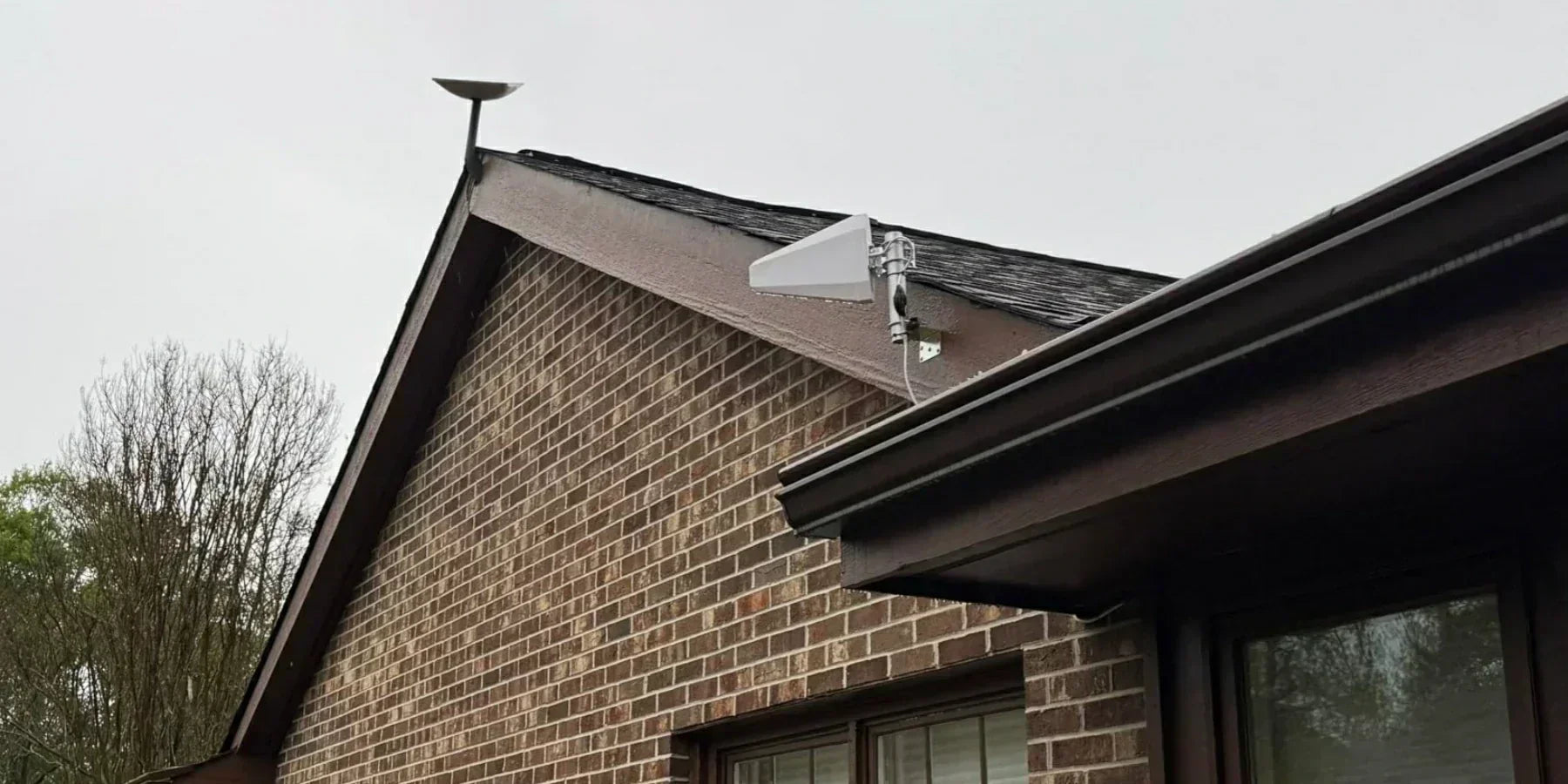
- Indoor antenna – Rebroadcasts the boosted signal inside your coverage area so phones/hotspots can connect normally.
Expert Tip: A booster requires an existing signal to work at least a weak outdoor connection. If outdoor signal is effectively absent, a booster can’t “manufacture” coverage.
1.2 Flowchart: Signal Booster Selection
Use this decision path before you spend money:

That “Step 1” is not optional: your outdoor signal quality is the strongest predictor of what performance you’ll get indoors.
2. How Signal Strength Works (dBm Explained)
Before choosing a booster, you must measure your signal strength in dBm.
Signal Strength Chart
|
Signal Level |
dBm Range |
Real Experience |
| Excellent |
≥ -65 |
Fastest data, stable calls |
| Very Good | -65 to -75 |
Strong performance |
|
Good |
-75 to -85 | Normal usage |
| Fair | -85 to -95 | Slowdowns possible |
| Weak |
-95 to -105 |
Dropped calls likely |
| Very Weak | ≤ -105 | Nearly unusable |
👉 If your outdoor signal is below -110 dBm, a booster may not perform well.
3. Why Your Cell Signal Is Weak
Why Cell Signals Become Weak
Most “dead zones” are caused by a mix of physics and environment, not your phone.
Distance from cell towers
Radio links experience free-space attenuation that increases with distance (a fundamental baseline used in link budgets).
Building materials
Walls, roofs, and windows can impose heavy loss. International propagation guidance specifically addresses how building materials and structures affect radiowave propagation.
Independent measurement research has shown that some windows can be among the highest-loss structures tested, reaching losses on the order of up to ~50 dB in certain scenarios.
Terrain & foliage
Terrain irregularities cause diffraction/shadowing effects that reduce received field strength beyond “simple line of sight.” Vegetation can add additional attenuation; the International Telecommunication Union provides models and notes that attenuation varies widely with species, density, and season.
Network congestion
Even with adequate signal strength, performance can vary by time of day because mobile networks are shared resources and tower load changes (“rush hour” effects are commonly noted in consumer connectivity guidance).
4. Do 4G and 5G Signal Boosters Really Work?
Yes—but with conditions.
Works Best For:
- LTE (4G) networks
- Low-band 5G (sub-6GHz)
- Weak but existing outdoor signal
Limited For:
- mmWave 5G (very high frequency)
- Areas with zero outdoor signal
👉 Key insight: most “5G coverage” today still relies heavily on low-band and LTE infrastructure.
Yes, but only for the 5G layers your booster is actually capable of amplifying. Here’s the key idea: “5G” is not one frequency. Regulators and industry sources describe 5G as using low, mid, and high-band spectrum.
Low-band generally provides wider-area coverage and better indoor penetration than higher frequencies; mid-band balances coverage and capacity; high-band provides ultra-high speed hotspots but limited range and poor penetration through obstacles.
Many consumer boosters, including multiple HiBoost home and vehicle models, advertise “5G compatible” and list 5G DSS support meaning they amplify cellular bands that may carry LTE and/or 5G-NR via DSS on the same spectrum.
Author Insight: If your carrier’s “5G” at your address is mostly low-band 5G, a HiBoost system that supports those bands can meaningfully improve indoor usability. If your goal is to pull in mmWave 5G, understand that mmWave is widely documented as being much harder to get indoors, often requiring line-of-sight and outdoor/window-mounted solutions rather than typical indoor boosting.
Table: Typical Signal Strength vs Performance
The quickest way to translate your readings into real-world expectations is to map dBm to user experience. The following ranges are published in consumer guidance from Worcestershire County Council, including a note that Ofcom defines a sufficiently strong 4G signal as ≥ −105 dBm (“Fair and above”).
| Signal strength category | dBm range | What you typically feel |
| Excellent | ≥ −65 | Great voice quality and maximum data speeds |
| Very Good | < −65 to ≥ −75 | Strong signal, very good speeds |
| Good | < −75 to ≥ −85 | Adequate voice quality and good speeds |
| Average | < −85 to ≥ −95 | Usable, but may be inconsistent |
| Fair | < −95 to ≥ −105 | “Fair but useful” signal |
| Poor | < −105 to ≥ −115 | Speeds increasingly slow |
| Weak | < −115 | Marginal data; disconnections can occur |
5. How to Choose the Right Signal Booster (Step-by-Step)
Step 1: Measure Outdoor Signal (Critical)
How to Measure Your Signal Strength
To choose the right booster, measure outdoor signal first, then measure indoors in your worst room(s).
iPhone:
- Dial 3001#12345# to access Field Test Mode (instructions are documented in enterprise mobility guidance and consumer connectivity guides).
Android:
- Many devices show signal strength in dBm under Settings → About Phone → Status / SIM Status.
- At the platform level, Android’s telephony APIs expose technology-specific signal strength in dBm.
Understanding dBm:
- dBm values for cellular signals are typically negative; closer to 0 is stronger and more usable. The table above provides a practical mapping for what those numbers mean day-to-day.
How to Find Your Nearest Cell Tower
You don’t always need a perfect “tower map” to aim a booster correctly. A practical method is:
- Identify where outdoor signal is strongest (walk the perimeter or test multiple sides of the building).
- If your kit uses a directional outdoor antenna, temporarily mount it, then rotate it slowly while watching a live metric (dBm/RSRP) until you find the best reading.
- Smart, app-assisted models can make this easier: HiBoost Smart Link kits explicitly instruct users to use the app during installation to optimize antenna direction.
Step 2: Identify Coverage Area
Choose based on space size:
- Small room: 500–2,000 sq ft
- Medium home: 2,000–6,000 sq ft
- Large home: 6,000–10,000+ sq ft
- Vehicle / RV: cabin only
Step 3: Choose Booster Type
Below are the booster categories shoppers typically choose between mapped directly to HiBoost product families and use cases.
Single-Room Boosters
Best when your problem is localized (e.g., one bedroom, one office, one corner of a house), and you want a simpler installation.
HiBoost examples:
-
HiBoost Sidekick (single-room/small-space coverage listed at 500–2,000 sq ft; supports multiple key bands; designed for smaller areas).
- HiBoost Home Lite (500–2,000 sq ft; lists 5G DSS support and HiBoost app monitoring).
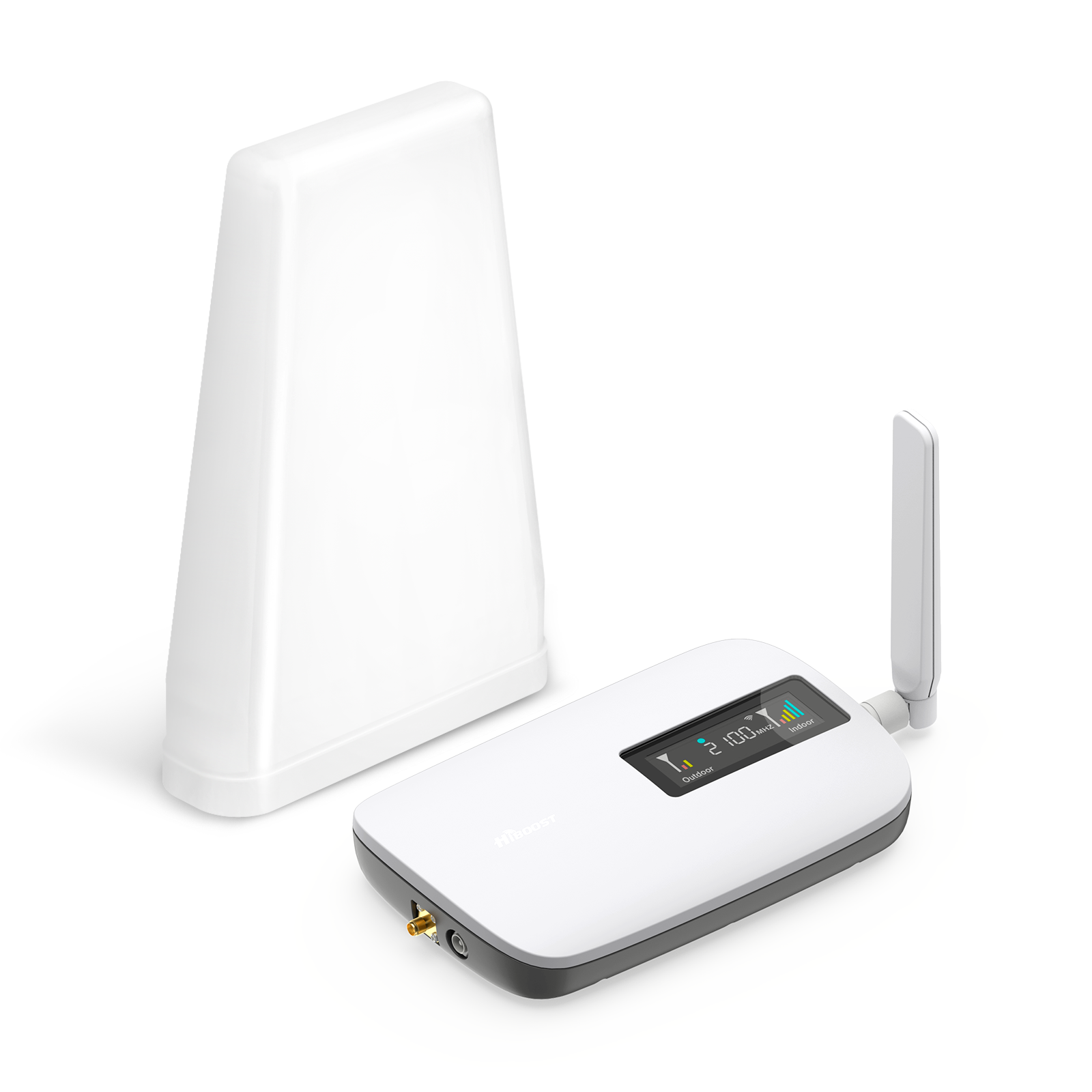
HiBoost Sidekick Cell Signal Booster for Home
Covers 500 - 2,000 sq. ft.
Multi-Room / Whole-Home Boosters
Best when you need coverage across multiple rooms/floors and want an outdoor antenna plus indoor distribution.
HiBoost examples:
- HiBoost 4K Smart Link (1,000–4,000 sq ft; Smart Link positioning with LCD + app support).
- HiBoost 4K Plus Pro (3,000–6,000 sq ft; multi-antenna kit design described for multi-room coverage).
- HiBoost Home Max (3,000–7,500 sq ft; 70 dB max gain with app monitoring and touchscreen design).
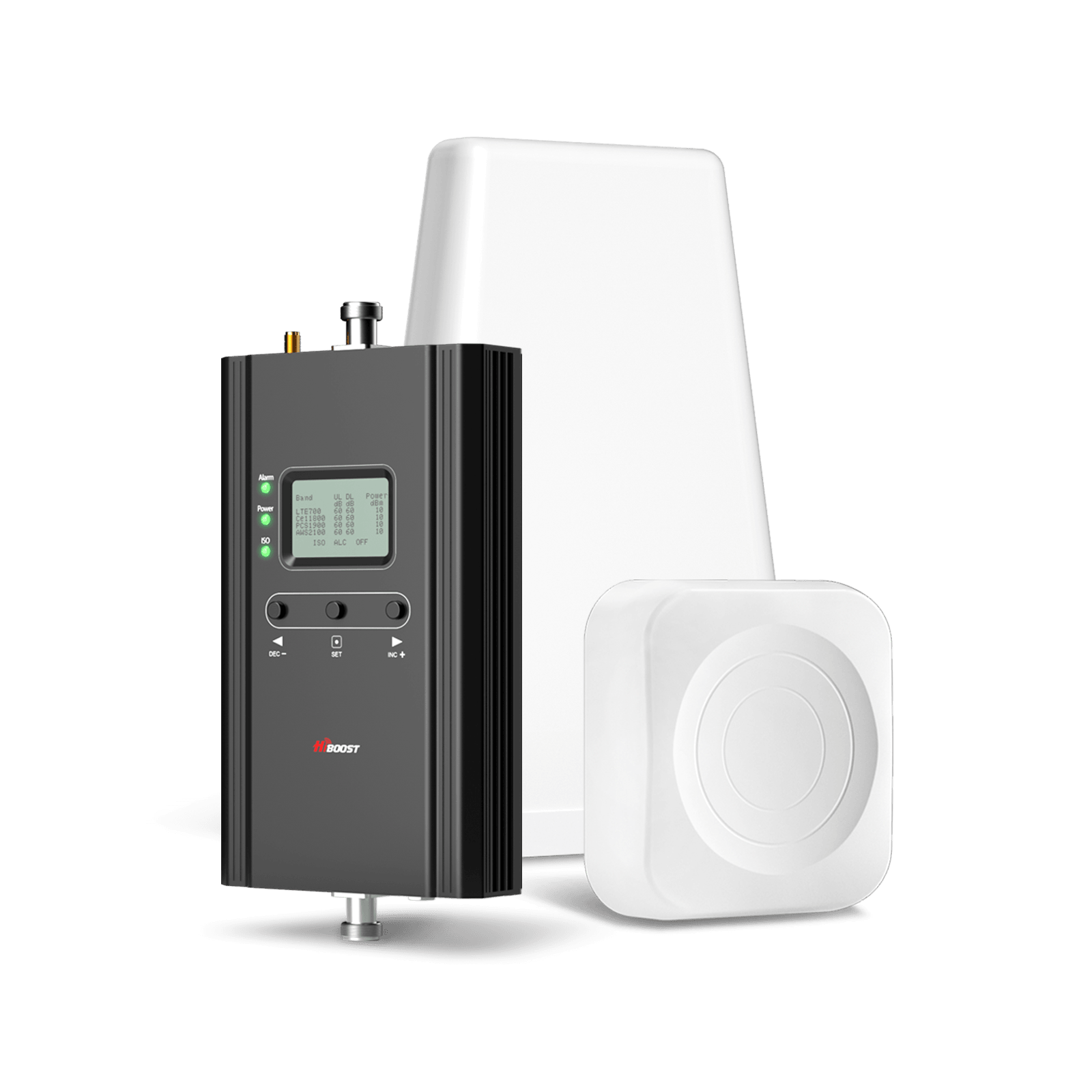
HiBoost 4K Smart Link Cell Signal Booster
Covers 1,000 - 4,000 sq. ft.
High-Power Commercial-Grade Boosters
Best for offices, warehouses, and higher user counts. These often require more planning.
HiBoost examples:
- HiBoost’s enterprise category emphasizes auto power management plus manual gain control (MGC), and multi-carrier support for large-scale deployments.
Vehicle / RV Boosters
Best when your issue is on the move. Vehicle systems typically use an exterior antenna and an interior antenna inside the cabin.
HiBoost examples:
-
HiBoost Travel 2.0 RV Signal Booster (RV/camper use; 50 dB gain; multi-user coverage in-vehicle; FCC approved per product page).
- HiBoost MobileLink Commuter (cars/SUVs; 50 dB max gain; lists 5G DSS support and multiple bands).
-
HiBoost Travel 3.0 ExplorerX (off-road/truck focus; rugged foldable outdoor antenna; cites up to 50 dB gain and a cabin coverage estimate dependent on terrain and outside signal).
The “right” category is less about marketing labels and more about coverage engineering: outdoor signal quality + indoor distribution + antenna type. That’s why HiBoost product pages repeatedly pair square-foot coverage targets with gain and antenna system descriptions.
Step 4: Choose Antenna Type
| Type | Best Use Case |
|
Directional antenna |
Rural areas, long-distance towers |
| Omnidirectional antenna | Vehicles, multi-direction signals |
6. Best Signal Booster Types by Scenario
Apartments (small footprint, one or two problem rooms)
- Start with a single-room/small-home class: HiBoost Sidekick or HiBoost Home Lite when your target is a small coverage zone, and you want an easier installation path.
- If your apartment is multi-room and you need stronger distribution, consider a compact multi-room option like HiBoost 4K Smart Link (rated 1,000–4,000 sq ft) for broader indoor coverage.
Large Homes (multi-floor, wide coverage demands)
- For multi-room homes, choose a system designed for larger square footage and multiple indoor antennas. Options like HiBoost 10K Smart Link (4,000–10,000 sq ft) and HiBoost Home Max (3,000–7,500 sq ft) are positioned for bigger coverage needs.
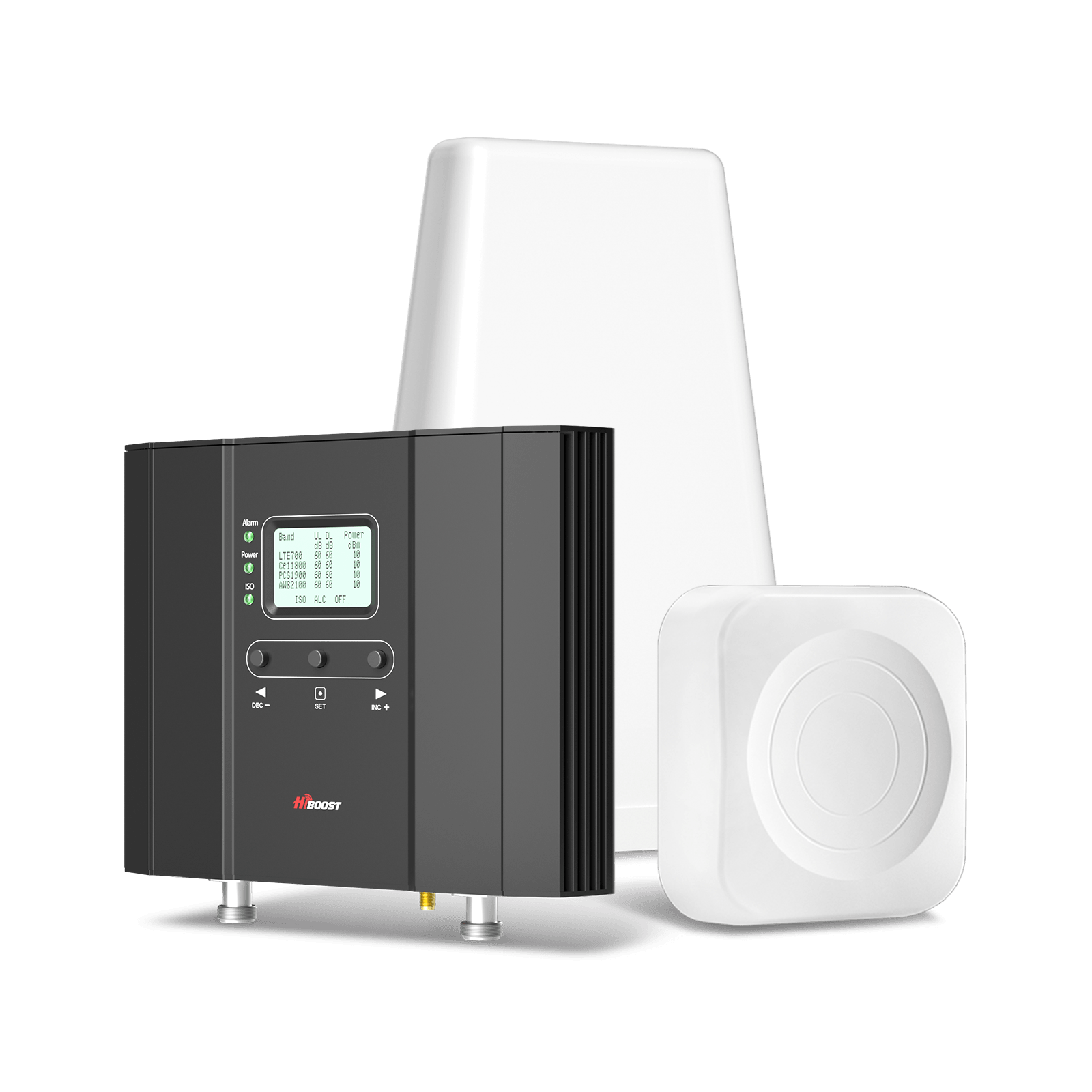
- For very large builds or properties with weak outdoor signal, whole-home/high-power kits like HiBoost 15K Smart Link Deluxe are positioned as high-gain, multi-antenna solutions.
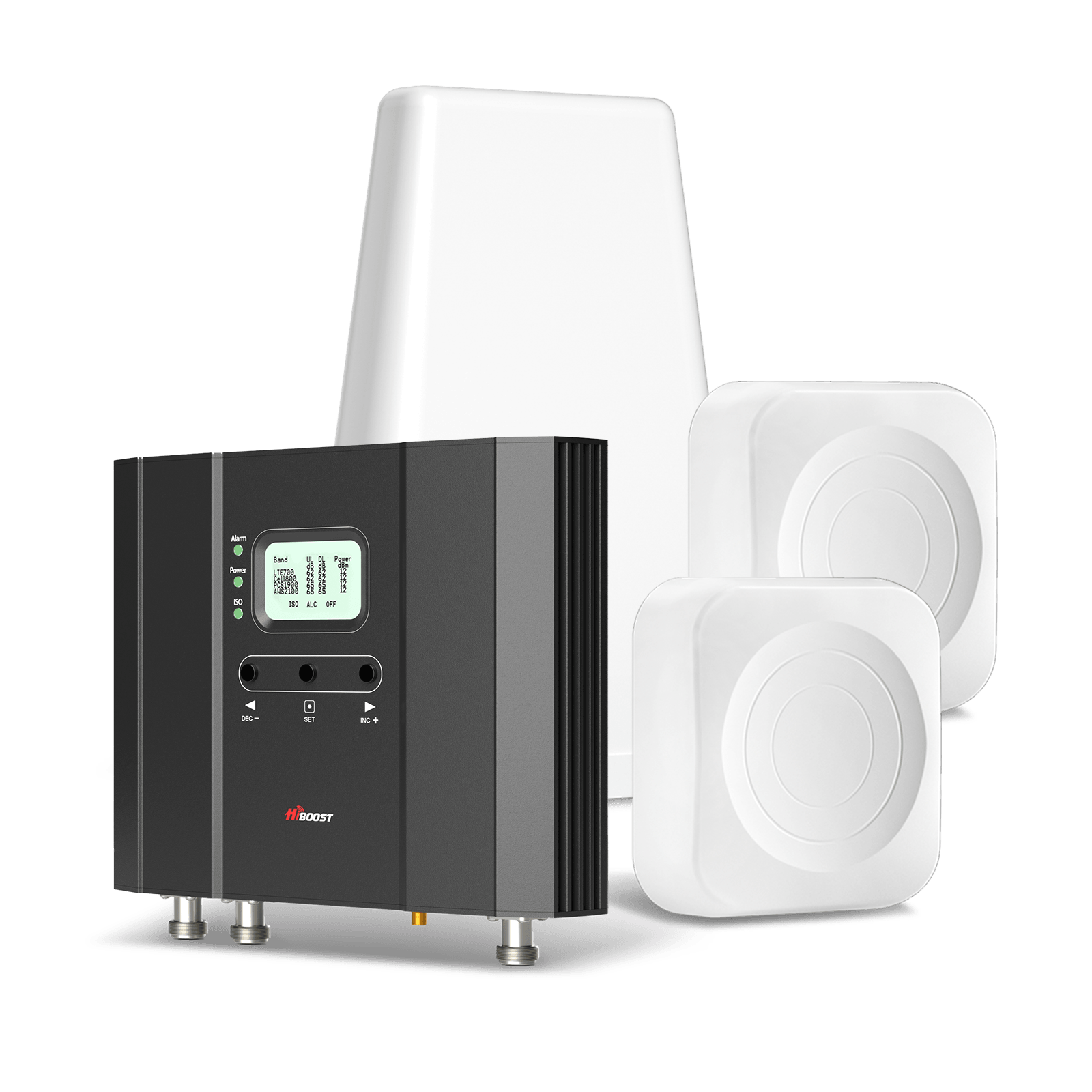
HiBoost 15K Smart Link Deluxe Cell Booster
Covers 7,000-15,000 sq. ft.
Rural Areas (usable outdoor signal but weak indoors)
- Rural success often depends on getting the best possible donor (outdoor) signal often with a directional antenna aimed correctly. HiBoost’s higher-gain home kits are commonly framed as solutions for weak outdoor signal scenarios.
- If your home construction heavily blocks signal (metal roofing, dense materials), HiBoost’s own guidance highlights that boosters can’t create signal, but can be effective if outdoor signal is usable and installation is done correctly.
RV / Vehicle (signal changes constantly)
- Vehicle boosters generally benefit from omni-directional reception because towers aren’t in one fixed direction while driving. HiBoost’s vehicle ecosystem includes car/SUV and RV-focused systems, plus accessories designed for harsh weather and mobility.
If you’re between two models, choose based on outdoor signal weakness and indoor distribution needs, not the “maximum” square-foot number on a box. HiBoost itself frames coverage as dependent on outside signal strength and setup, and third-party consumer guidance makes the same point: placement and existing signal drive results.
7. Antennas, Gain, And What Performance You Should Expect
Choosing the Right Outdoor Antenna
The outdoor antenna is often the “make or break” part of the system. Consumer guidance from T-Mobile explains the practical difference:
- Directional antennas focus on one tower for a stronger pull.
- Omnidirectional antennas pick up signals from all directions.
👉 Rule of thumb:
If you know where the tower is → directional
If you don’t → omnidirectional
HiBoost applies this logic across its lineup: large home kits commonly bundle a high-gain directional outdoor antenna, while travel/vehicle accessories emphasize 360° omni-directional reception.
Table: Antenna Recommendation by Environment
| Your environment |
What typically works best |
Why |
| Rural / fringe coverage, towers far away | Directional outdoor antenna | Maximum pull from the strongest tower direction |
| Suburban homes, mixed tower directions |
Directional if you can aim; omni if tower direction is unclear |
Directional gives stronger donor signal; omni avoids aiming complexity |
|
RVs, cars, moving locations |
Omni-directional antenna |
Tower direction changes constantly; 360° pickup is practical |
| Metal roofs / dense building materials | Directional + best outdoor placement + good cable practices |
Penetration loss can be severe; best donor signal and solid installation matter most |
Expert Tip: Aim your directional antenna by testing. HiBoost Smart Link kits explicitly encourage using the app during install to dial in antenna direction based on performance feedback.
Understanding Booster Gain
“Gain” is expressed in dB and indicates how much a booster can amplify the captured donor signal. HiBoost product pages commonly list max gain.
Practical interpretation:
- Higher gain generally helps more when your outdoor signal is Poor/Fair, because there’s less signal to work with.
- Indoors, distribution matters as much as gain. A higher-gain booster paired with poor indoor antenna placement can still underperform.
Real Signal Booster Performance
A realistic expectation:
- Boosters can meaningfully improve voice reliability (fewer drops) and data consistency by improving the effective signal conditions indoors but only if you start with a usable outdoor signal and install correctly.
- Boosters do not add tower capacity. If your issue is tower congestion, your speeds may still vary even after boosting the signal.
- Many consumer boosters can’t “fully” amplify all layers of 5G (especially mid-band/mmWave). However, boosting LTE and some lower-frequency 5G layers can still improve real-world usability.
Case Study:
HiBoost published a real-world installation summary where HiBoost 10K Plus Pro was selected for a ~5,032 sq ft building with basement coverage issues across carriers, installed with a donor antenna on the roof and two service antennas in the basement.

The write-up reports improved service for major carriers and includes before/after speed test discussion, plus a note that the booster was chosen for features such as built-in antenna options and remote monitoring capability.
The durable takeaway is not the exact building, but the pattern: good donor placement + correct indoor antenna layout + an appropriately sized system is what turns “no service in the basement” into usable connectivity.
8. Signal Booster vs WiFi Calling
Wi-Fi Calling can be an excellent fallback especially if your home has strong broadband but it solves a different problem:
- Wi-Fi Calling routes calls/texts over Wi‑Fi when cellular coverage is limited or unavailable.
- A signal booster improves the cellular link itself (voice and mobile data) by strengthening existing carrier signals indoors.
In practice:
- If your broadband is stable, Wi‑Fi Calling can provide reliable calls even with weak cellular coverage.
- If you need better mobile data indoors, better coverage for multiple devices, or you want your phone to behave normally without relying on Wi‑Fi, a booster is often the more direct fix.
9. Common Mistakes to Avoid
9.1 Ignoring outdoor signal measurement
Most “wrong purchase” stories begin with skipping dBm testing. Measure outside first, then pick a booster class from there.
9.2 Buying cheap or uncertified devices
U.S. carrier guidance stresses that boosters must be FCC-certified and use automatic gain control to prevent interference, and installation should follow instructions.
9.3 Poor antenna placement
Outdoor antenna placement determines performance; mounting location and aiming matter.
9.4 Not considering building size and indoor distribution
Coverage depends on square footage, building layout, and whether you need multiple indoor antennas. HiBoost product tiers and bundles reflect this reality.
9.5 Assuming all boosters work for 5G mmWave
Both carrier-side consumer education and industry guidance emphasize that mmWave behaves very differently indoors, with limited ability to pass through obstacles compared with lower frequencies.
9.6 Signal Troubleshooting Checklist
If your booster is installed but results are disappointing, check these first:
- Outdoor antenna in the best available signal spot.
- Antenna aiming: adjust while monitoring performance metrics.
- Antenna separation/isolation: poor separation can cause oscillation/feedback and reduce performance.
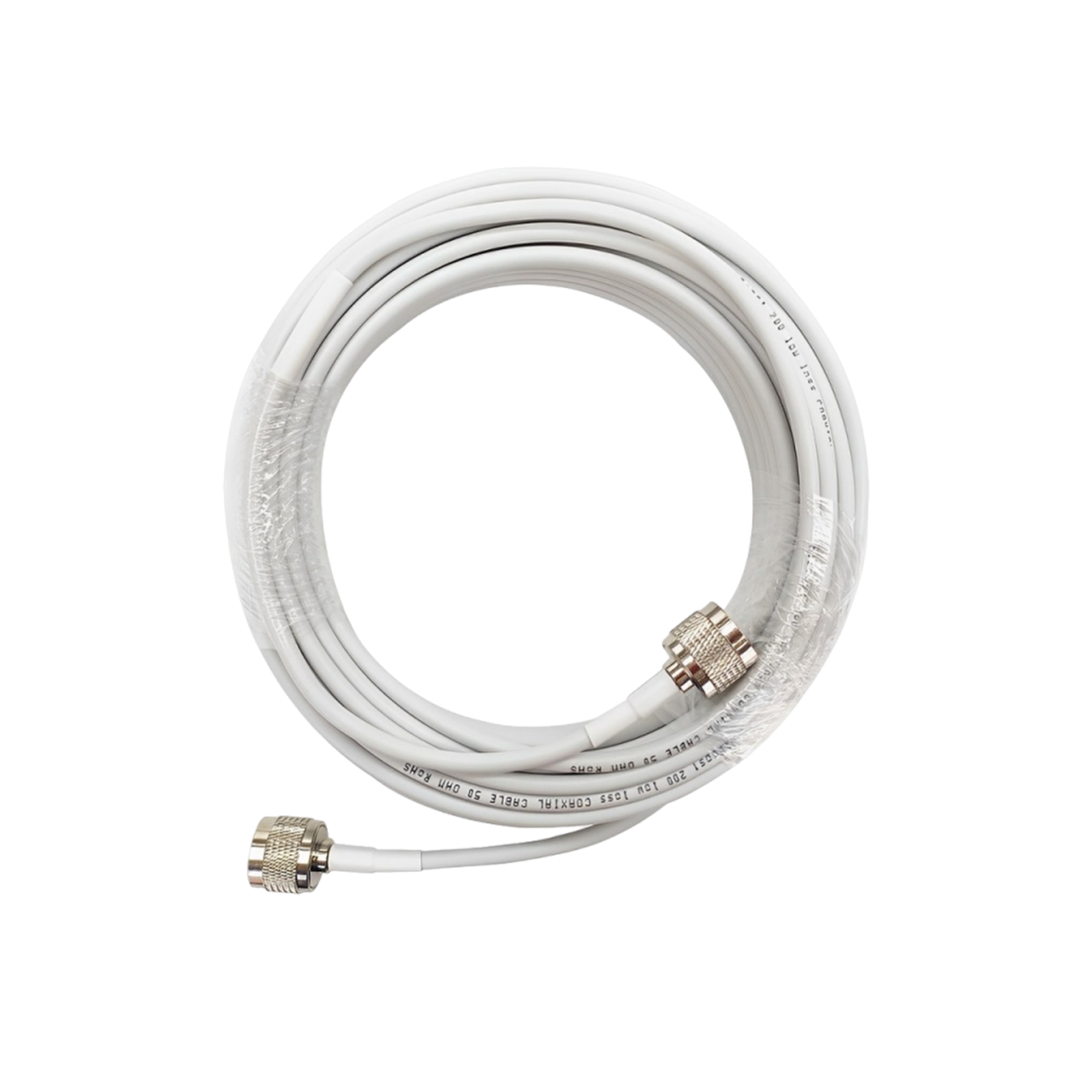
- Cable run quality: longer runs and poor cable practices increase loss; HiBoost promotes low-loss cable and lightning protection accessories for durability and performance stability.
- Expectation check: boosters can’t create signals and can’t fix tower congestion.
10. Installation Tips for Best Performance
- Do a quick “before” survey: record outdoor and indoor dBm readings; then compare “after” readings once installed.
- Install steps matter. HiBoost’s vehicle/RV products outline a structured install sequence: mount the outdoor antenna, connect it to the booster, power the booster, place the indoor antenna, and use the app for installation assistance and monitoring.
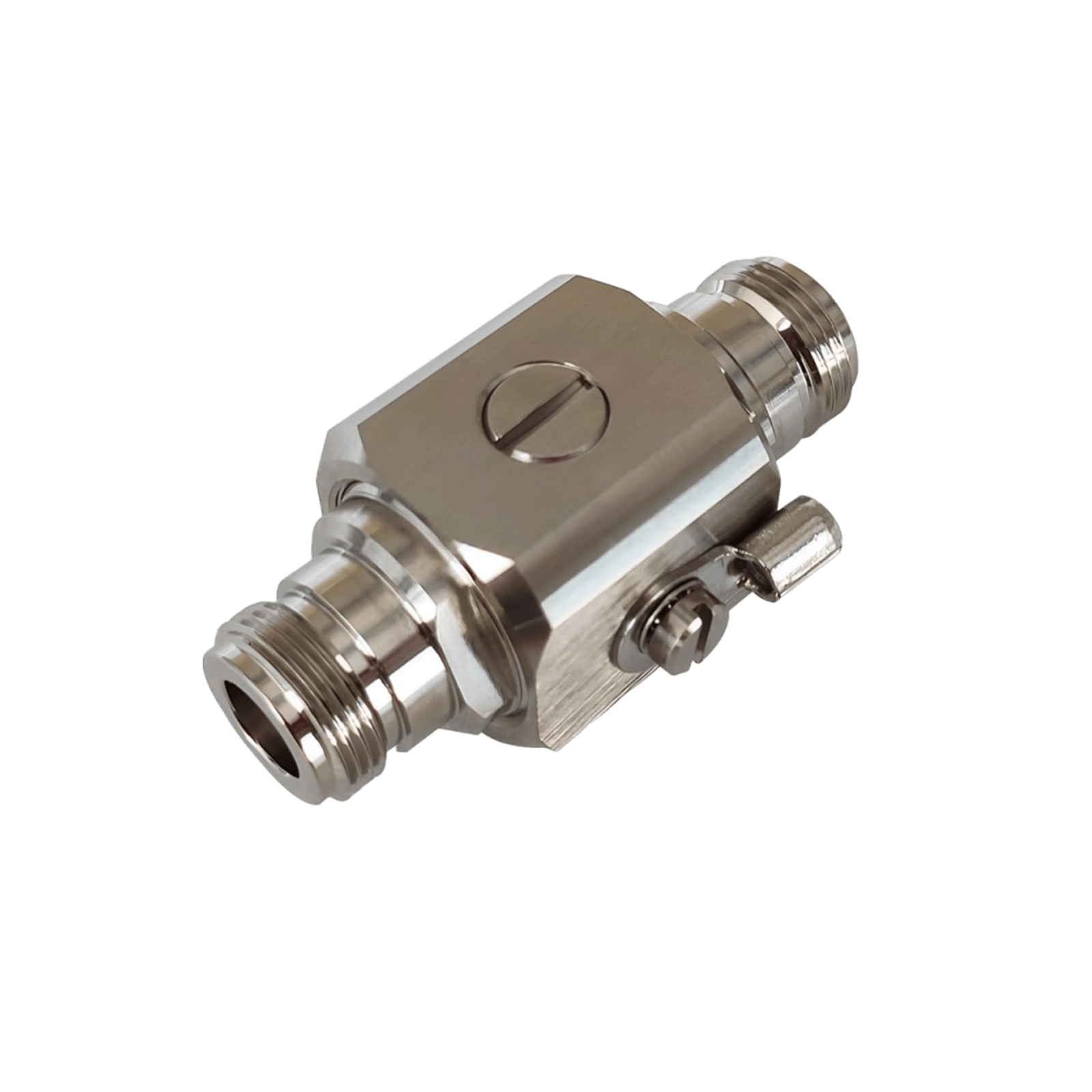
- Protect outdoor components. HiBoost sells a lightning arrester kit and explicitly states it should be properly grounded to protect the outdoor antenna and system.
11. Do Signal Boosters Work for 5G?
Yes—but only for certain types:
- ✔ Low-band 5G → works well
- ✔ LTE-based 5G (DSS) → works
- ✖ mmWave 5G → usually not practical indoors
👉 Conclusion: boosters improve coverage, not peak 5G speed.
12. Future of 5G Signal Boosting
The biggest “future proofing” idea: boosters are fundamentally frequency devices, not “4G vs 5G” devices.
- Regulators continue to describe the 5G roadmap as spanning low-, mid-, and high-band spectrum.
- Industry/operator guidance notes that 5G uses low/mid/high bands, and that 5G will reuse/refarm existing legacy bands along with new allocations.
- Dynamic Spectrum Sharing is one of the transition techniques enabling LTE and 5G NR to coexist on existing 4G assets, described by Ericsson as enabling dynamic switching between LTE and 5G NR coverage on existing spectrum.
What that means for buyers in 2026:
- If your primary indoor problem is coverage reliability, a strong low-band solution plus correct installation is often the highest-impact move. Low-band is repeatedly characterized as the best for coverage and indoor penetration compared with higher-band spectrum.
- If your expectations are centered on mmWave indoors, recognize the physics: mmWave signals are documented as passing through objects less effectively than lower mobile frequencies, and may require line-of-sight and external/window-mounted approaches.
13. Frequently Asked Questions
Q1: Do cell phone signal boosters work for 5G?
Yes, especially for low-band 5G and LTE/5G DSS layers that operate on supported cellular bands. But boosters generally can’t “fully” amplify all 5G layers.
Q2: How much signal improvement can a booster provide?
It depends on the outdoor donor signal, antenna placement, building loss, and the system’s gain. A practical way to judge “how much room you have to improve” is to compare your starting dBm category (Weak/Poor/Fair/etc.) to your target usability range.
Q3: Do boosters work for all carriers?
Many consumer boosters are designed to be carrier-agnostic across major bands, but actual compatibility depends on the specific carrier frequencies in your area and the booster’s supported bands. HiBoost product pages and collections repeatedly position their home boosters as working with all U.S. carriers on the listed bands.
Q4: Are signal boosters legal?
In the U.S., signal boosters are legal when they comply with FCC rules and when carrier consent/registration requirements are met. The FCC’s rules include requirements around Consumer Signal Booster operation and registration mechanisms.
Q5: How far can a booster reach?
“Reach” is best understood as the indoor coverage area the system can serve, driven by building layout, indoor antenna placement, and your starting outdoor signal. HiBoost lists coverage ranges (e.g., 1,000–4,000 sq ft; 4,000–10,000 sq ft; 7,000–15,000 sq ft) and supports multi-antenna designs for larger spaces.
14. Choosing a 4G/5G booster in 2026 comes down to three decisions:
- Measure outdoor signal in dBm.
- Match your required coverage area to the right booster tier.
- Invest in installation quality especially outdoor antenna placement and correct indoor distribution because that’s where real-world performance is won or lost.
Recommended Reading
Best Cell Phone Signal Boosters for Home (2026 Review)
Best Cell Signal Boosters for Rural Areas and Remote Homes
How to Install a Cell Phone Signal Booster in Your Home
FCC Rules and Legal Requirements for Cell Signal Boosters in 2026
Weak Cell Signal Troubleshooting & Solutions (2026 Updated Guide)
How to Choose the Best Cell Phone Signal Booster for Your Home (2026 Updated Guide)
How to Choose the Right Cell Signal Booster for Your Home, Apartment, or RV (2026 Guide)
Car/Suv,RV,Truck,Vehicle


Our Home Signal Booster


Popular Articles


Leave a comment
All comments are moderated before being published.
This site is protected by hCaptcha and the hCaptcha Privacy Policy and Terms of Service apply.